
February 02, 2023
Wetland Health and Environmental Data Logging
Long-term water-level, temperature and soil records help researchers and custodians understand wetland change and target field investigation.
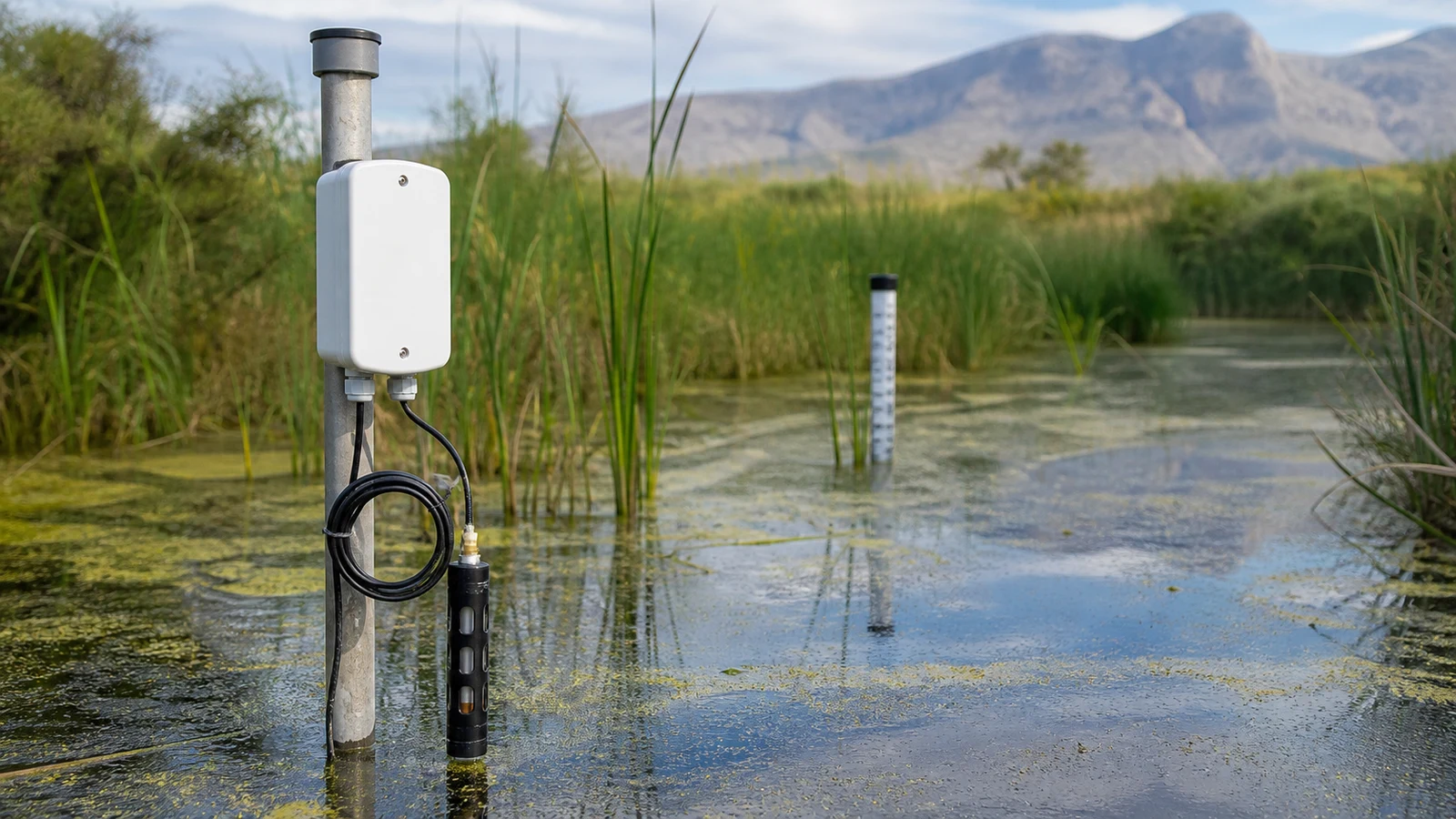
Wetlands slow and store water, moderate floods and droughts, support biodiversity and sustain livelihoods connected to farming, fishing and tourism. In South Africa these systems face pressure from land-use change, water abstraction, infrastructure and pollution. Protecting them requires more than occasional observation: it requires a consistent environmental record that shows how conditions change through wet and dry periods.
Measure the wetland as a changing system
Water level is a central indicator, but it gains meaning when interpreted alongside rainfall, temperature, soil moisture, water chemistry and site observations. A level change may reflect seasonal rainfall, an upstream intervention, evaporation or a damaged channel. Multiple parameters and well-documented locations help researchers test those possibilities.
Monitoring design should account for the wetland's shape, inflows, outflows and distinct vegetation or soil zones. Reference points, installation depths and field notes make later comparisons defensible. Without that metadata, even highly accurate readings can become difficult to use.
Create a dependable time series
Data loggers can collect readings at regular intervals through events that field teams might otherwise miss. Instruments such as Onset water-level loggers, supported by HOBOconnect workflows, can simplify configuration and retrieval. Where barometric compensation is required, the method and source record should be documented so processed water levels can be traced back to raw observations.
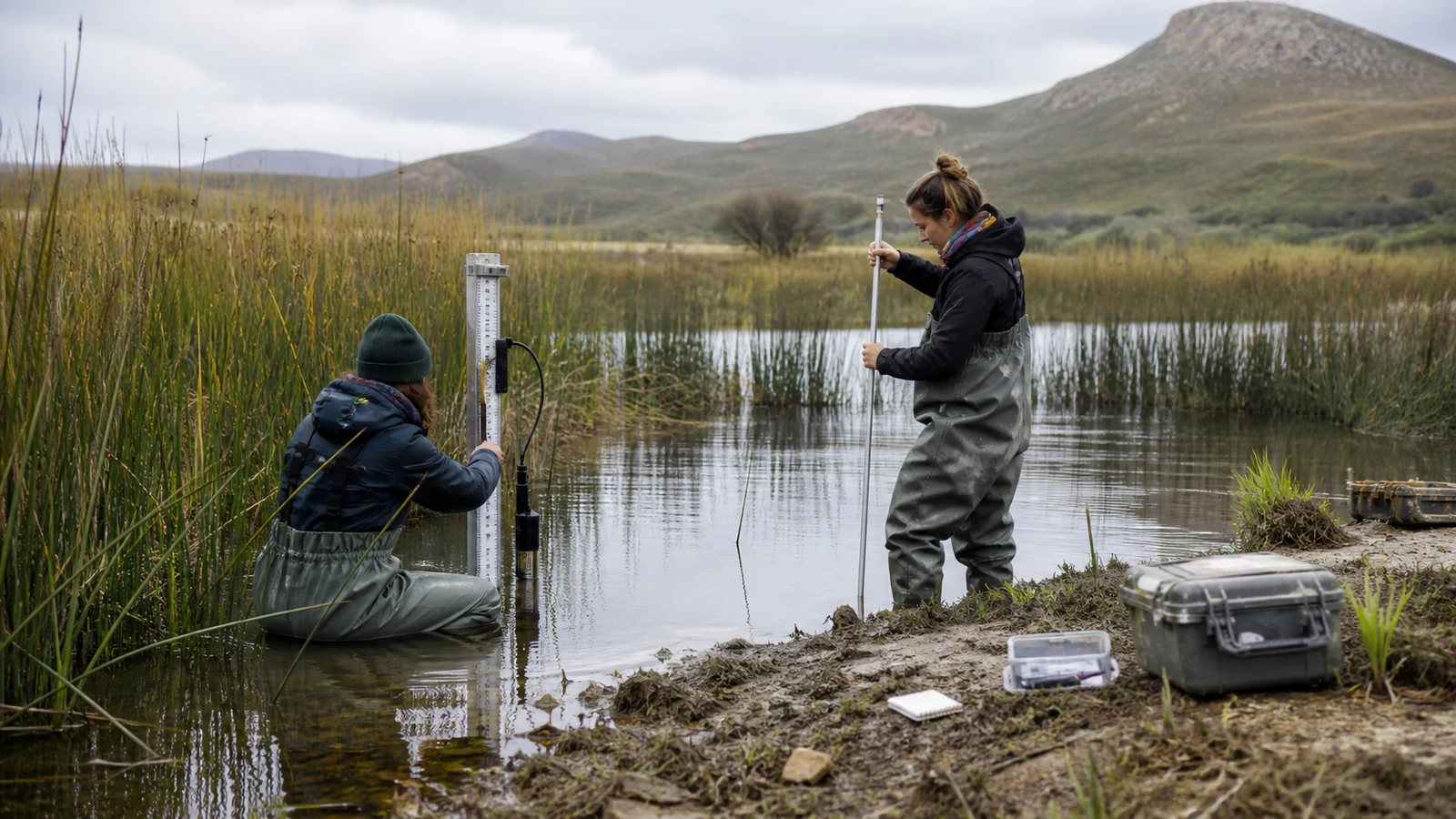
Wireless access can reduce disturbance and make routine checks easier, but it does not remove the need for maintenance. Teams should inspect installations, record fouling or movement, review battery and communication status, and flag gaps rather than silently smoothing them away.
Use analytics to direct field work
Nvirosense™ can align water-level and environmental histories, expose thresholds and make changes visible across monitoring points. Analytics may highlight an unexpected recession, a temperature shift or a location behaving differently from nearby stations. These signals are prompts for investigation, not automatic diagnoses of ecological cause.
A traceable timeline helps researchers compare sensor evidence with rainfall, land management and survey findings. It also supports communication with conservation managers by showing what changed, when it changed and which records underpin the interpretation.
Build evidence for stewardship
South Africa's protected wetlands and commitments under the Ramsar Convention reflect the importance of conservation, but local decisions still depend on local evidence. Long-term data can inform restoration priorities, water-management discussions and the timing of biological surveys.
The aim is not to replace ecological expertise. It is to give that expertise a stronger, continuous record from which to assess risk and evaluate whether interventions are having the intended effect.
Environmental logging makes wetland change easier to detect and explain. When measurements are well placed, maintained and interpreted with field knowledge, Nvirosense™ can turn them into traceable intelligence for research, restoration and responsible water stewardship.