

April 25, 2023
Thermal Mapping Services for SAHPRA Readiness
Planned temperature and humidity mapping identifies storage variability and produces evidence that can support pharmaceutical facility qualification and SAHPRA readiness.

A thermostat reading cannot show whether every part of a pharmaceutical store experiences the same conditions. Thermal mapping examines the space as a system, locating patterns that routine monitoring may miss and providing evidence for risk assessment, qualification and later sensor placement.
Translate requirements into a mapping plan
The work begins with the user requirement specification, product needs, room design and applicable quality procedures. A site survey considers doors, loading areas, windows, HVAC outlets, shelving, ceiling height, heat sources and known problem points. These details shape the logger layout and the operating conditions the study must cover.
There is no responsible one-size-fits-all grid or duration. A seven-day study is common in some settings, but the protocol should justify its duration, sampling interval, sensor density, acceptance criteria and treatment of normal operations. The customer approves these requirements within its quality system.
Seasonal studies reveal different risks
A location that performs well in mild weather may behave differently during a hot South African summer or a cold inland winter. Seasonal mapping helps show how external conditions and HVAC demand affect the controlled space. It may also be necessary to study empty and loaded states or other worst-case operating conditions.
Temperature is often central, while humidity is included where product, packaging, equipment or procedure makes it relevant. Coastal and inland sites can present different moisture challenges, but neither should be dismissed without a documented risk assessment.
Find persistent hot and cold locations
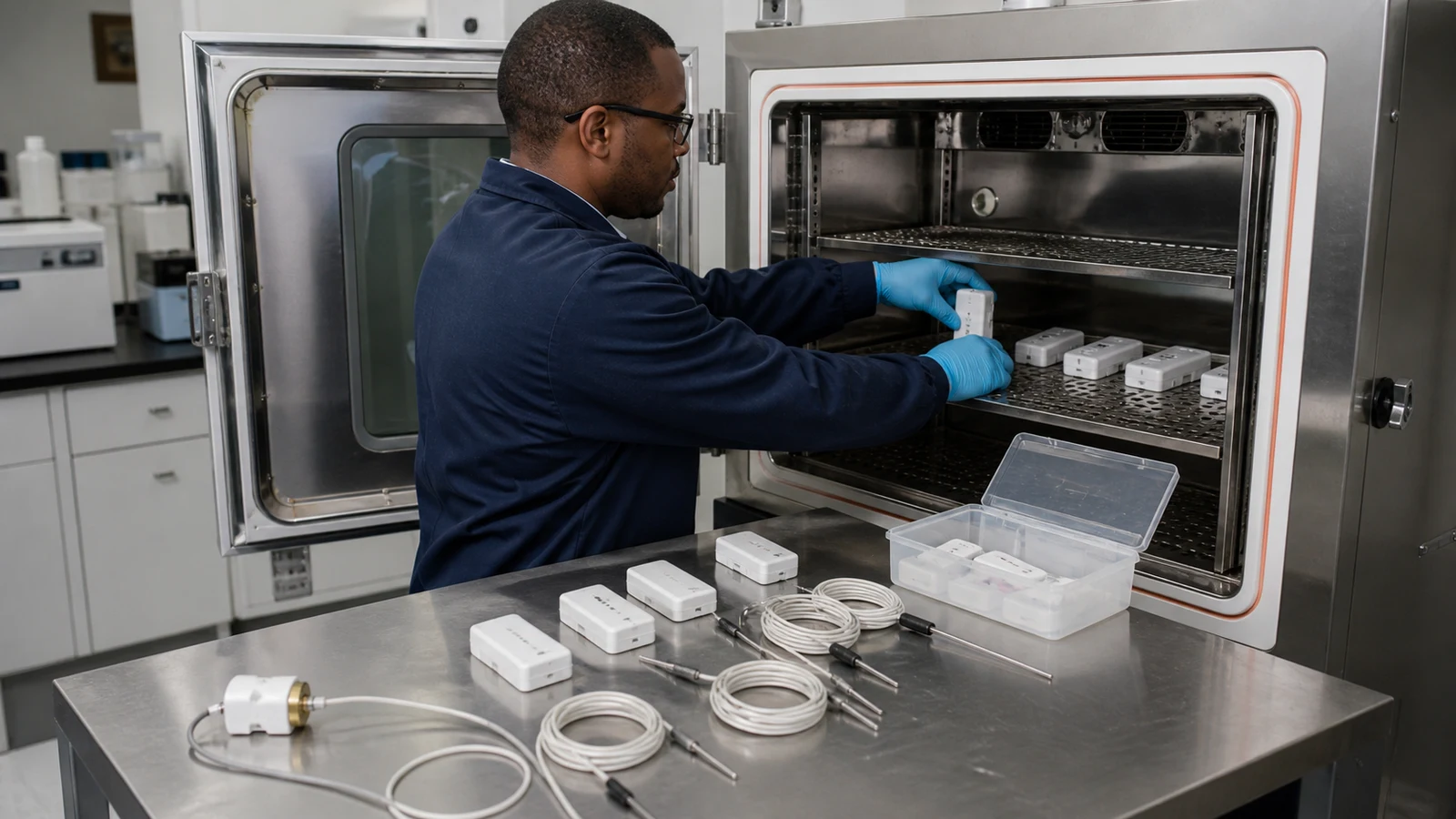
Mapping loggers are placed across representative and risk-based positions, with traceable identity and appropriate calibration status. The analysis should consider duration and trend, not simply select the single highest and lowest readings. Door openings, defrost cycles, loading and HVAC events can explain patterns that would otherwise look arbitrary.
Persistent hot or cold locations may influence where products are stored, where routine monitors are installed or what facility changes are needed. An outlying logger may also indicate placement, damage or calibration concerns, so data review must combine statistics with study observations.
Keep execution and evidence controlled
The approved protocol should record who deployed and retrieved each logger, when the study started and ended, and whether any event affected the run. Nvirosense™ can support the collection and visualisation of mapped measurements, while photographs, floor plans, calibration information and field notes complete the evidence trail.
Missing data or a protocol deviation should be assessed transparently rather than hidden in an averaged graph. If the study does not meet its approved criteria, the responsible quality team decides whether remediation, further analysis or a repeat is required.
Turn the study into an operating control
A mapping report should present the protocol, layout, results, exceptions and conclusions in a form suitable for customer review. It can recommend routine monitor positions and identify facility risks, but approval and qualification decisions remain with the customer's authorised personnel.
Mapping is also not a permanent substitute for monitoring. Changes to HVAC, racking, loading patterns, room fabric or intended use may alter the environmental profile and should be evaluated under change control. Periodic review helps determine whether remapping is justified.
Thermal mapping supports SAHPRA readiness when it is risk-based, controlled and reviewable. Nvirosense™ helps preserve the environmental evidence, while the customer's QMS governs acceptance criteria, qualification status and any regulated decision that follows.