

May 10, 2023
South African Agriculture in the Face of Climate Change
Local weather, soil and crop records help South African farmers adapt operational decisions as heat, rainfall and water availability become less predictable.
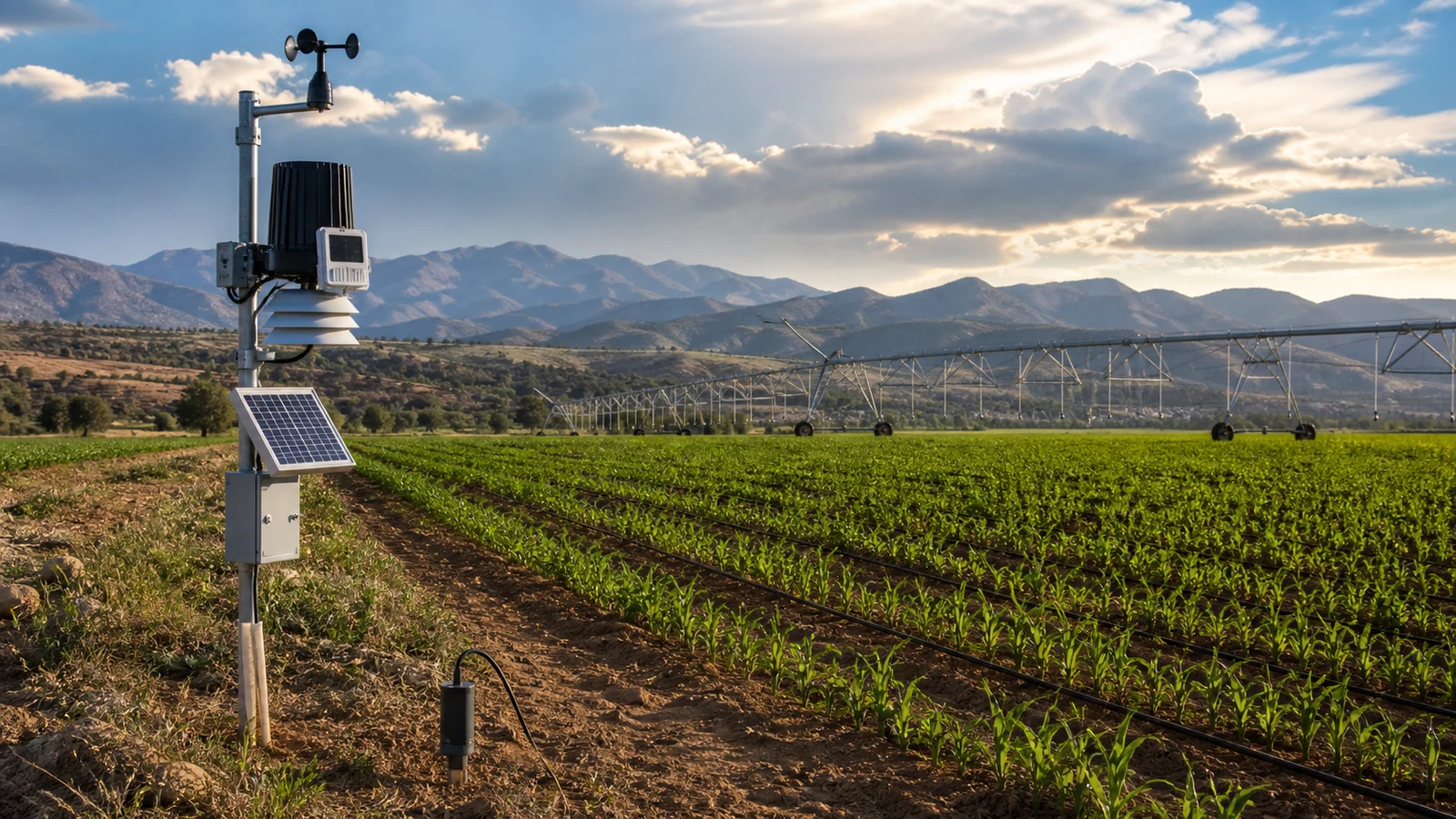
South African agriculture already works with large differences in rainfall, temperature, soils and access to water. Climate change adds pressure by shifting familiar patterns and increasing the operational consequences of drought, heat, intense rain and poorly timed weather events.
Climate risk arrives at block level
A regional forecast can signal a difficult season, but the farm still has to decide what to do in a particular orchard, field or livestock area. Local weather stations and soil probes show how rainfall was distributed, how quickly the root zone dried and where heat or wind differed from the wider forecast.
These measurements cannot guarantee yield or predict every extreme event. They reduce ambiguity around immediate tasks and create a local climate history that can be compared with crop performance, input use and field observations.
Adaptation includes agronomy and business choices
Farmers may respond through crop and cultivar selection, soil conservation, adjusted planting windows, water planning or diversified income. Each choice has different costs and knowledge requirements, which can be especially difficult for smaller producers to absorb. Technology should therefore be judged by the decision it improves, not by the number of sensors installed.
A modest monitoring plan around a high-value block or scarce water source may deliver more practical value than an expansive network without maintenance or ownership. Clear objectives also make training, support and phased expansion easier.
Use water where evidence shows demand
Soil-moisture trends, rainfall, evapotranspiration context and irrigation events help growers understand whether water reached the intended root zone and how long it remained available. Leaf-wetness and local weather data can also contribute to crop-disease risk assessment when interpreted with suitable agronomic models and scouting.
Nvirosense™ brings field conditions, irrigation activity and alerts into one view. A grower can review which block is moving towards a defined threshold, verify that a pump cycle changed soil conditions and avoid sending staff to check every location on the same schedule.
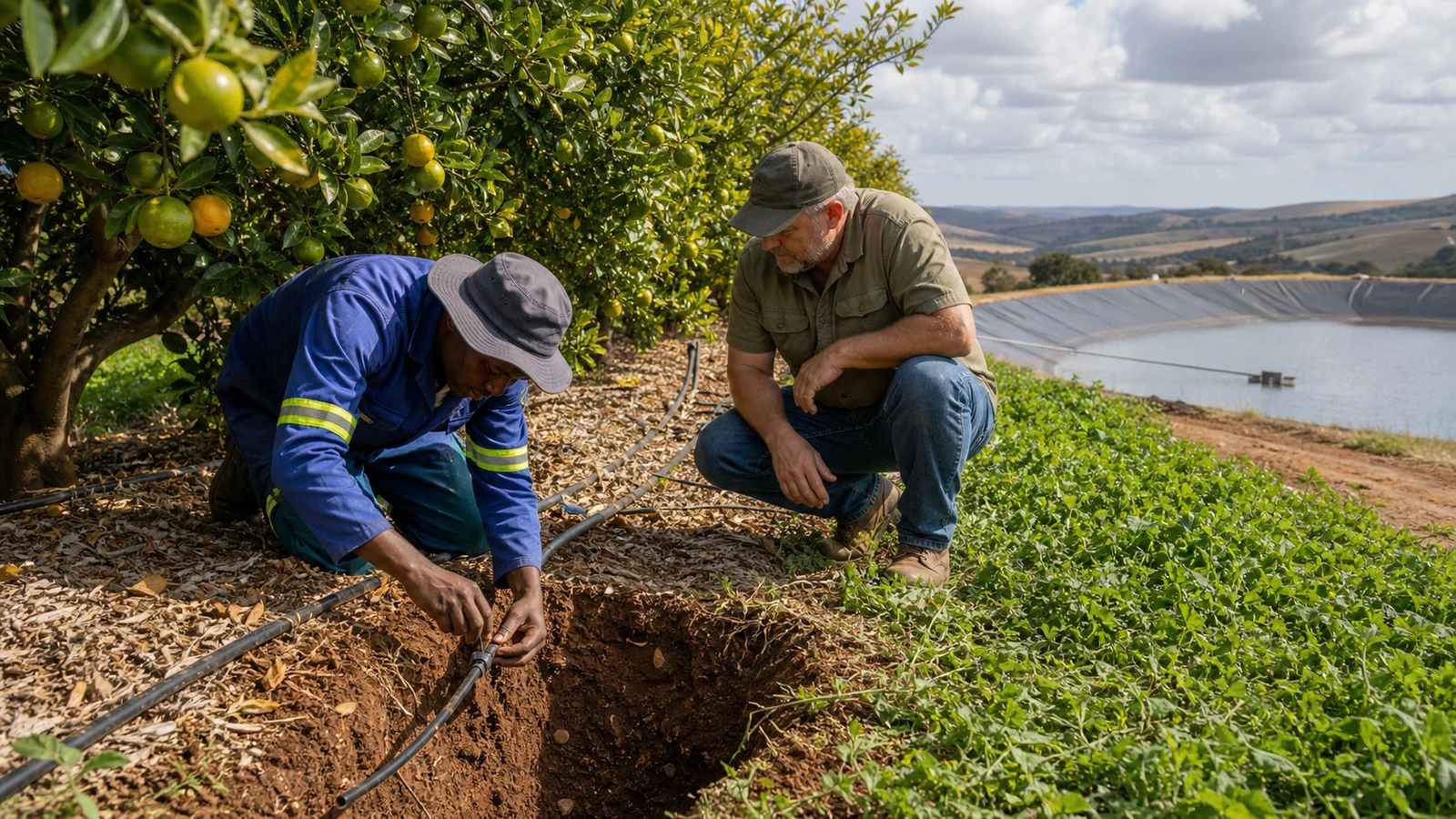
Preserve evidence across seasons
Climate adaptation is not evaluated in one afternoon. Multi-season records allow farms to compare planting, irrigation and crop outcomes under different weather patterns. Device maintenance, calibration checks and data-quality flags must remain part of that history so that apparent changes are not confused with sensor drift or missing data.
Analytics can help identify relationships and test domain-specific models, but forecasts should be presented with their assumptions and limitations. Ground observations remain necessary for confirming whether a modelled stress or disease risk is actually present.
Make climate-smart practice accessible
Remote monitoring can reduce routine travel and provide earlier visibility to advisers or farm managers, particularly across distributed sites. Low-power field communication and long-life devices may make deployments more practical, provided the design accounts for coverage, power, security and local repair capability.
Agriculture also contributes to emissions and land-use outcomes, so resilience and resource efficiency should be considered together. Measured water, energy and input records help farms demonstrate real operational change without claiming that one technology resolves the wider climate challenge.
Environmental monitoring gives South African farmers a stronger local evidence base for adaptation. Its best contribution is practical: earlier awareness, more selective use of scarce resources and a traceable record from which each farm can learn as conditions change.