

September 07, 2023
Smart Monitoring for Mushroom Production
Temperature, humidity, carbon-dioxide and production records help mushroom growers manage each growth stage with greater consistency and traceability.
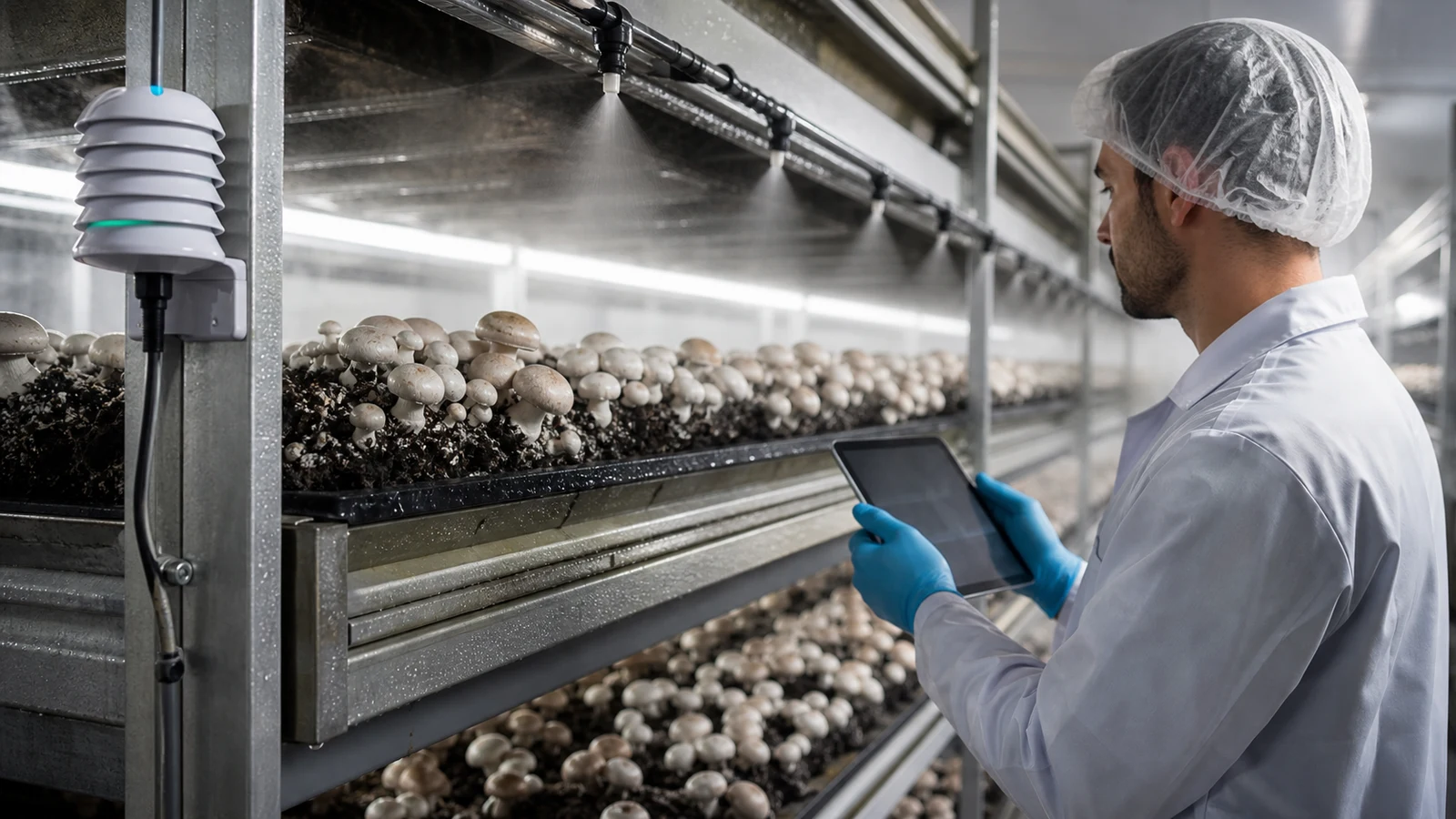
Mushroom production depends on a tightly managed microclimate. A room that looks stable during a morning inspection may have experienced hours of excess heat, dry air or rising carbon dioxide overnight. Connected monitoring gives growers a continuous record of those changes and a clearer basis for protecting yield and quality.
Treat each growth stage as a distinct environment
Species and production stages do not share one universal setpoint. White button, oyster and maitake mushrooms, for example, have different temperature preferences, and the conditions used for spawn run may not suit pinning or fruiting. The monitoring plan should therefore link each room, crop and production stage to its intended operating range.
That context prevents a technically accurate reading from being interpreted against the wrong target. Nvirosense™ can bring room identity, crop stage and sensor history into the same view, helping production teams compare what happened with the recipe they intended to follow.
Watch temperature and moisture together
Temperature influences biological activity, while relative humidity and substrate moisture influence evaporation and surface conditions. A warm room may dry more rapidly even when humidity appears acceptable, and excessive moisture can create its own quality and disease risks. Reviewing the signals together is more useful than responding to one number in isolation.
Wireless sensors placed across the growing area can reveal gradients near doors, racks, air outlets and external walls. Trends help growers distinguish a brief disturbance from a persistent control problem and provide evidence for adjusting humidification, heating, cooling or airflow.
Use carbon dioxide as a production signal
Mushrooms release carbon dioxide as they grow in compost or substrate. During pinning, accumulated carbon dioxide can interfere with the environmental cues used to initiate fruiting, while different varieties and stages may tolerate different concentrations. A carbon-dioxide sensor makes this otherwise invisible change visible to the grower.
Ventilation and HVAC responses should be set around the crop plan rather than a generic threshold. Nvirosense™ can show carbon dioxide beside temperature, humidity and equipment events, giving operators evidence to judge whether fresh-air changes produced the expected room response.
Turn alerts into controlled action
An alert is valuable when it identifies the affected room and condition, reaches the responsible person and retains acknowledgement and follow-up. The response might involve checking a fan, closing a door, inspecting a humidifier or confirming the crop stage before changing a setpoint. This workflow keeps automation from becoming a series of unexplained corrections.
Where control equipment is integrated, safe operating limits and manual oversight remain important. Monitoring supports earlier intervention; it does not replace crop inspection, hygiene practices or the grower's judgement about product condition.
Extend traceability beyond the growing room
Environmental history can be associated with batches, rooms and production dates to support quality review and food-safety records. Comparing cycles may reveal recurring hot spots, ventilation constraints or handling periods that deserve attention, creating a practical feedback loop for continuous improvement.
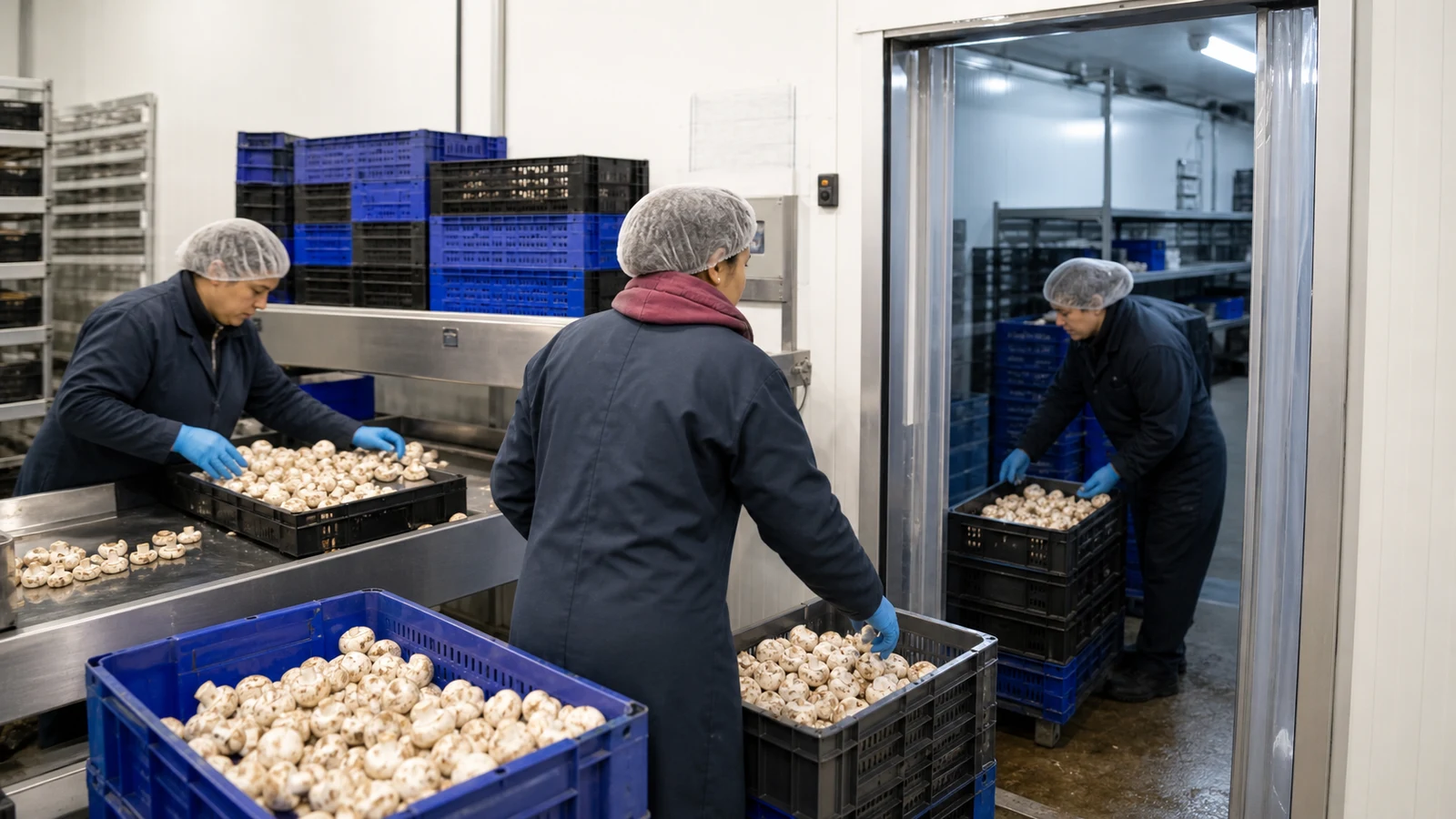
The same approach can continue after harvest through cooling, storage and dispatch. Linking pre-harvest conditions with post-harvest temperature and handover records creates a more complete account of the product journey without pretending that sensor data alone proves quality.
Successful mushroom growing is a balance of biology, equipment and attentive people. Continuous environmental evidence helps growers maintain that balance, respond to deviations sooner and learn from every production cycle with a traceable record of the conditions the crop experienced.