

November 02, 2023
SANAS, PPECB and Fruit Export Monitoring in South Africa
South African fruit exports depend on accredited services, inspection processes and continuous cold-chain evidence from packhouse to destination.
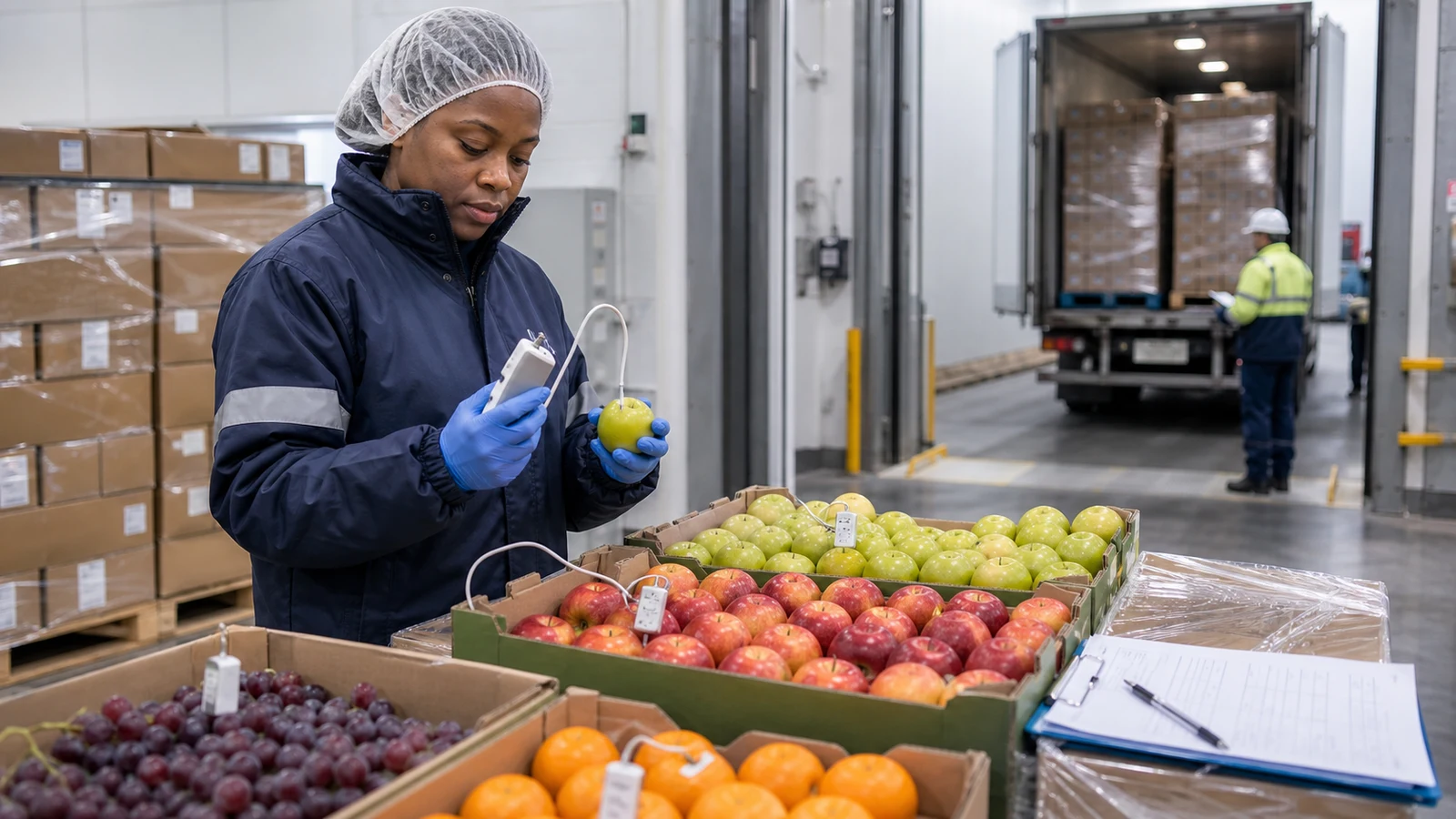
A carton of South African citrus, mangoes or avocados reaches an overseas shelf through a coordinated system of producers, laboratories, packhouses, inspectors, cold stores, hauliers and ports. Product quality depends on each party performing its role and preserving the handover record. SANAS and the PPECB occupy different positions in that system, while environmental monitoring supplies condition evidence that operators can use throughout storage and transport.
Different mandates, connected assurance
The South African National Accreditation System is the country's national accreditation body. It assesses the competence of conformity-assessment bodies against relevant standards and maintains registers of accredited organisations. Accreditation applies to the defined scope of the assessed body; it should not be presented as a general approval of every exporter, product or monitoring platform.
The Perishable Products Export Control Board performs statutory inspection and certification functions for perishable exports and provides food-safety and cold-chain services. Its work spans many product types and locations, helping manage export risk through documented checks. Exporters should confirm current requirements and product protocols directly with the applicable authority and their quality specialists.
Cold storage establishes the starting condition
Produce continues to respire after harvest, so removal of field heat and stable storage conditions influence quality and shelf life. Monitoring at intake, pre-cooling, cold rooms and loading areas shows whether the planned process was achieved and where delays occurred. Temperature is central, but humidity, door activity, airflow context and equipment events can add useful explanations.
Nvirosense™ can align readings with locations, devices, alarms and operator responses. Calibration and mapping records support measurement traceability, while the packhouse or exporter's approved procedures determine acceptance, escalation and disposition.

The reefer is a moving link, not a separate system
Refrigerated containers and vehicles protect the established product condition during the journey. Set-point and supply-air information alone may not describe pulp temperature or conditions throughout a load, so sensor placement and product-specific requirements matter. Loading-bay dwell, door openings, route stops and power interruptions should be read with the temperature timeline.
Combining fixed-site and mobile records creates a clearer handover history from packhouse to port and onward. If an excursion occurs, teams can identify when it began, what preceded it and whether the receiving evidence supports the same account.
Use monitoring to support food-safety processes
Food business operators have responsibilities covering traceability, hygiene, plant-protection controls and documented processes. Connected monitoring adds timely environmental evidence and can notify nominated people when a threshold or device status requires attention. It does not replace inspection, certification or the operator's food-safety system.
Trend analytics can also reveal recurring delays, unstable rooms or lanes that need investigation. Because reports retain device, period and event context, corrective actions can be linked to the evidence that prompted them and reviewed across a season.
Successful fruit export is the result of many accountable links rather than one certificate or device. Clear regulatory roles, suitable cold-chain infrastructure and traceable environmental records help South African operators protect quality and explain exceptions. Nvirosense™ contributes monitoring and decision support to that wider assurance process.