

January 26, 2023
Real-Time Monitoring Solutions
Real-time monitoring combines connected instruments, resilient data paths and shared workflows so teams can detect change and reconstruct decisions.
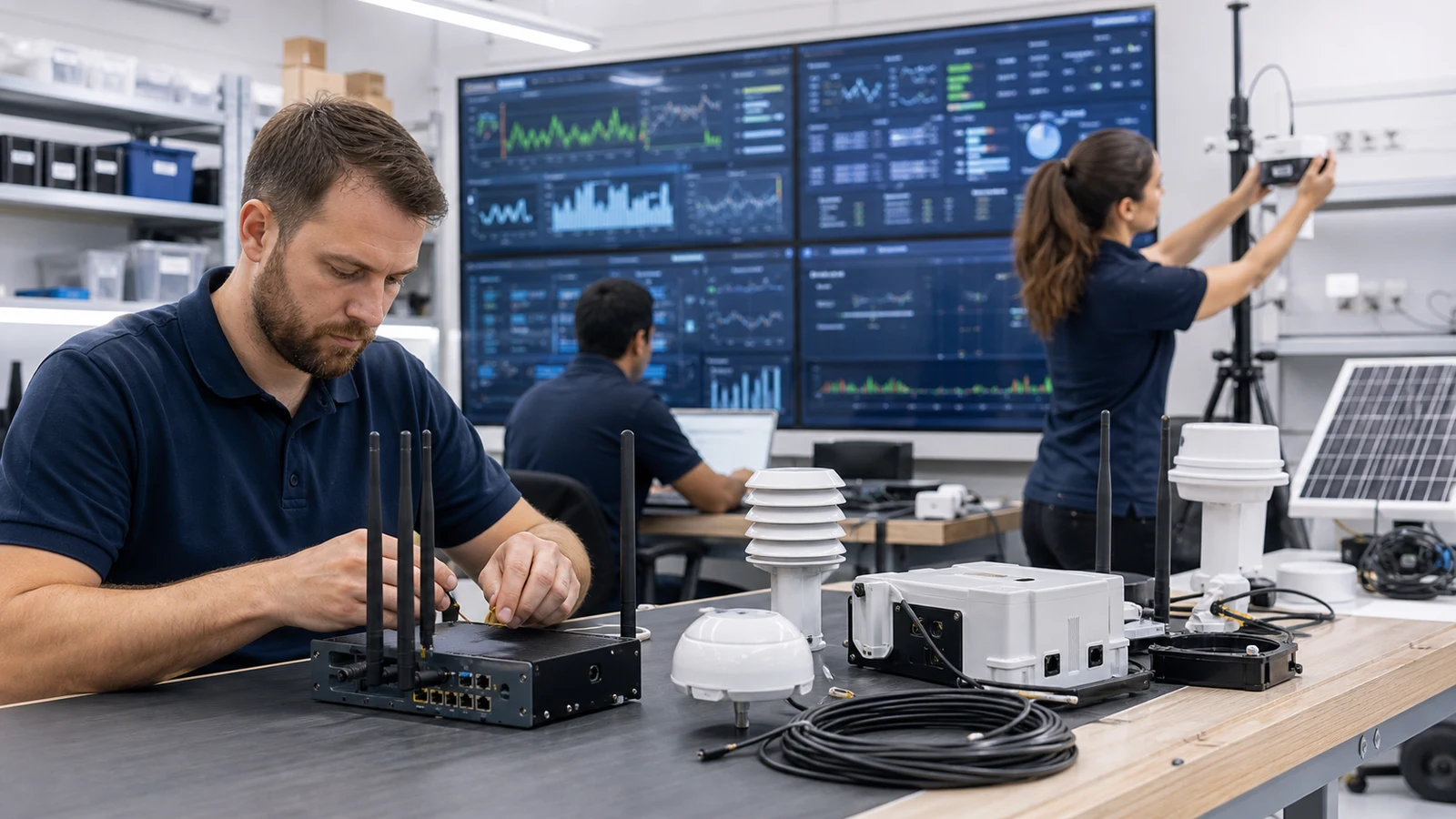
Real-time data shortens the distance between an environmental change and the people responsible for responding to it. That can improve operational decisions across storage, logistics, facilities and industry, but immediacy alone is not enough. Readings must be trustworthy, communications must expose failure, and the response must remain visible after an alert has cleared.
Define what real time means
A useful service level states how often a device samples, how often it transmits and how quickly the platform is expected to present the result. Those intervals are not always the same. Battery strategy, radio coverage and the consequence of delay should shape the design instead of an unqualified promise of instantaneous visibility.
Nvirosense™ can show current measurements alongside last-contact status and historical trends. This distinction matters: an old but plausible value should never be mistaken for a live condition. Data-quality flags and visible gaps protect the integrity of subsequent analysis.
Follow assets across the supply chain
Connected shipment devices can report temperature, location and status across road, air, ocean and storage stages. Products such as ELPRO's LIBERO G range use cellular connectivity, including NB-IoT variants, to support this type of visibility. Suitability depends on route coverage, shipment duration, packaging and the approved monitoring plan.
The strongest chain-of-custody view links readings to handovers and responsible parties. When an excursion occurs, teams need the sequence: where the asset was, which conditions were recorded, who received the alert and what action followed.

Connect field systems responsibly
No single protocol fits every site. Bluetooth can serve local retrieval, cellular networks can provide wide-area reporting, and LoRaWAN can move small sensor messages over a private or managed low-power network. A gateway may forward data to an on-site server or cloud platform, subject to coverage and security requirements.
Nvirosense™ supports multi-protocol monitoring so existing and new devices can contribute to one operational view. Network ownership, device identity and access controls should be explicit. Communications outages need store-and-forward or recovery plans appropriate to the risk.
Make collaboration part of the system
Supply-chain visibility fails when data stops at an organisational boundary. Agreed alert thresholds, escalation paths and handover expectations allow manufacturers, logistics providers and receiving teams to work from the same evidence while respecting access boundaries.
Analytics can prioritise exceptions and reveal recurring patterns, but they should not obscure the original measurements. Traceability from dashboard to device record gives auditors and operational reviewers a defensible foundation for understanding both the event and the response.
Real-time monitoring is most valuable as a coordinated evidence system, not merely a live screen. Nvirosense™ links devices, communications, analytics and response history so teams can act sooner and explain their decisions later.