

August 07, 2025
Photosynthesis Measurement and Plant Science Field Evidence
Reliable gas-exchange and chlorophyll-fluorescence measurements depend on capable instruments, sound experimental method and a traceable field record.
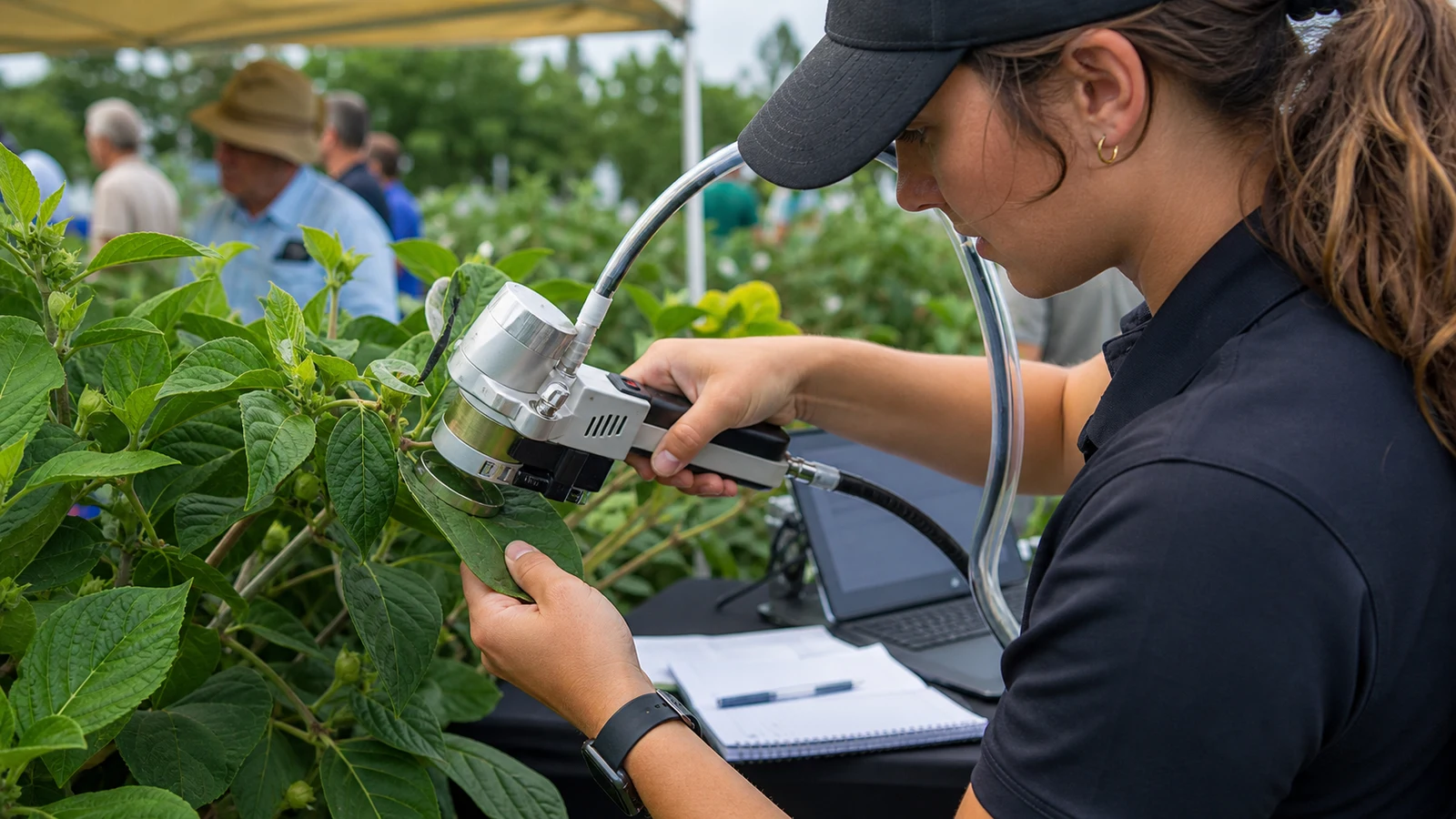
Plant science instruments can make invisible processes measurable, but a number on a screen is only the beginning of the evidence. Leaf gas exchange, fluorescence, light, temperature and water status must be collected with a clear question and careful method. Discussions around the LI-6800 Portable Photosynthesis System at the South African Association of Botanists' fiftieth gathering offered a useful reminder: research quality depends as much on measurement practice and interpretation as it does on advanced hardware.
Measure how a leaf responds
Portable gas-exchange systems allow researchers to examine carbon assimilation, transpiration, stomatal conductance and water-use behaviour at leaf level. When gas exchange is combined with chlorophyll a fluorescence, the record can connect carbon fixation with the performance of photosynthetic machinery. This is particularly useful when a study asks how plants respond to changing light, heat, water availability or another environmental treatment.
Dynamic assimilation methods extend the question beyond a stable chamber condition. Natural environments fluctuate, and a leaf may respond differently during rapid light transitions than it does at a single steady point. Carefully designed sequences can reveal response speed and recovery, provided chamber controls and surrounding field conditions are recorded together.
Method determines data quality
Sophisticated equipment does not remove the need for experimental discipline. Sensor matching, flow checks, chamber leakage, leaf coverage and the time allowed for a leaf to stabilise can all affect a result. A researcher must also consider whether the selected leaf, time of day and treatment sequence represent the biological question. Small procedural differences can otherwise look like physiological change.
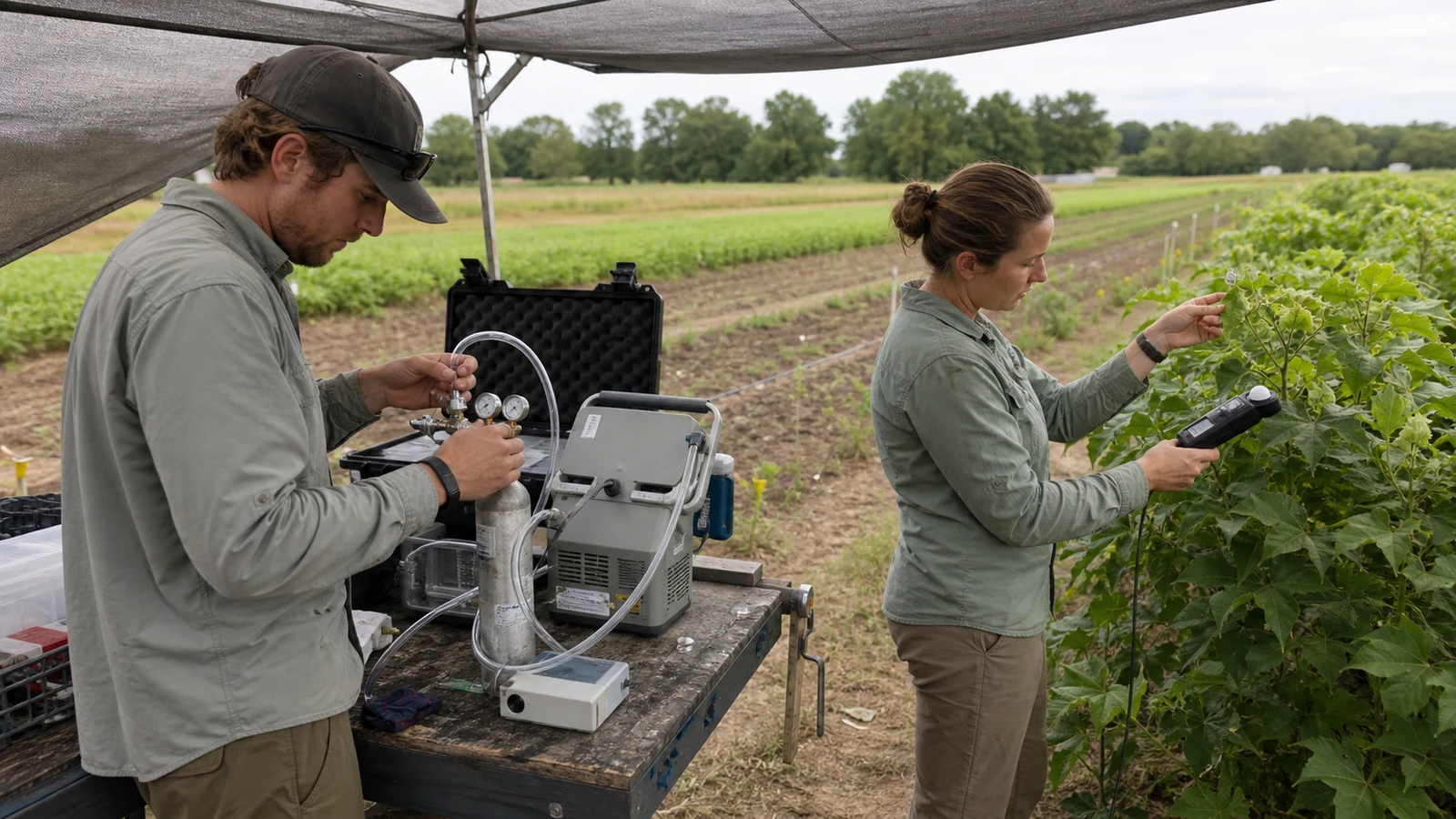
A traceable field record strengthens interpretation. Instrument configuration, operator, calibration or service status, plot, species, leaf position and ambient environmental data should be associated with each run. Nvirosense™ monitoring can add the surrounding weather, soil and radiation time series, giving researchers context for why two nominally similar measurements may differ.
Join physiology to the wider environment
Leaf measurements are snapshots within a larger system. Photosynthetically active radiation, vapour pressure deficit, soil moisture and canopy temperature shape plant response before and during a chamber measurement. Aligning these variables by time and location helps distinguish a treatment effect from a changing field environment and supports comparison across sites or seasons.
Analytics can organise these layers and flag gaps or unusual patterns, but scientific interpretation remains with the research team. The role of decision-support software is to preserve provenance, make comparisons reproducible and show how a conclusion relates to the original observations.
Research communities turn technique into practice
Conferences matter because measurement knowledge is often transferred through demonstration and discussion. Experienced users can expose pitfalls that are hard to see in a manual, while new users bring fresh questions about possible applications. Hands-on engagement with the LI-6800 and specialist presentations on photosynthesis history, mass balance and dynamic assimilation connected instrument capability to the realities of field research.
That exchange also helps monitoring providers understand what researchers need from data infrastructure: consistent timestamps, accessible exports, contextual environmental streams and records that survive beyond one campaign. These are practical foundations for collaborative and repeatable plant science.
From light response to water-use efficiency, photosynthesis research becomes more valuable when every measurement can be understood in context. Combining thoughtful protocol, dependable instrumentation and Nvirosense™ environmental records gives plant scientists a clearer path from a leaf-level observation to evidence that can be reviewed, repeated and compared.