

July 19, 2023
Pharmaceutical Storage and Distribution with Smart Monitoring
Continuous environmental and route evidence supports GxP storage, distribution, deviation review and stability programmes while quality decisions remain with authorised teams.
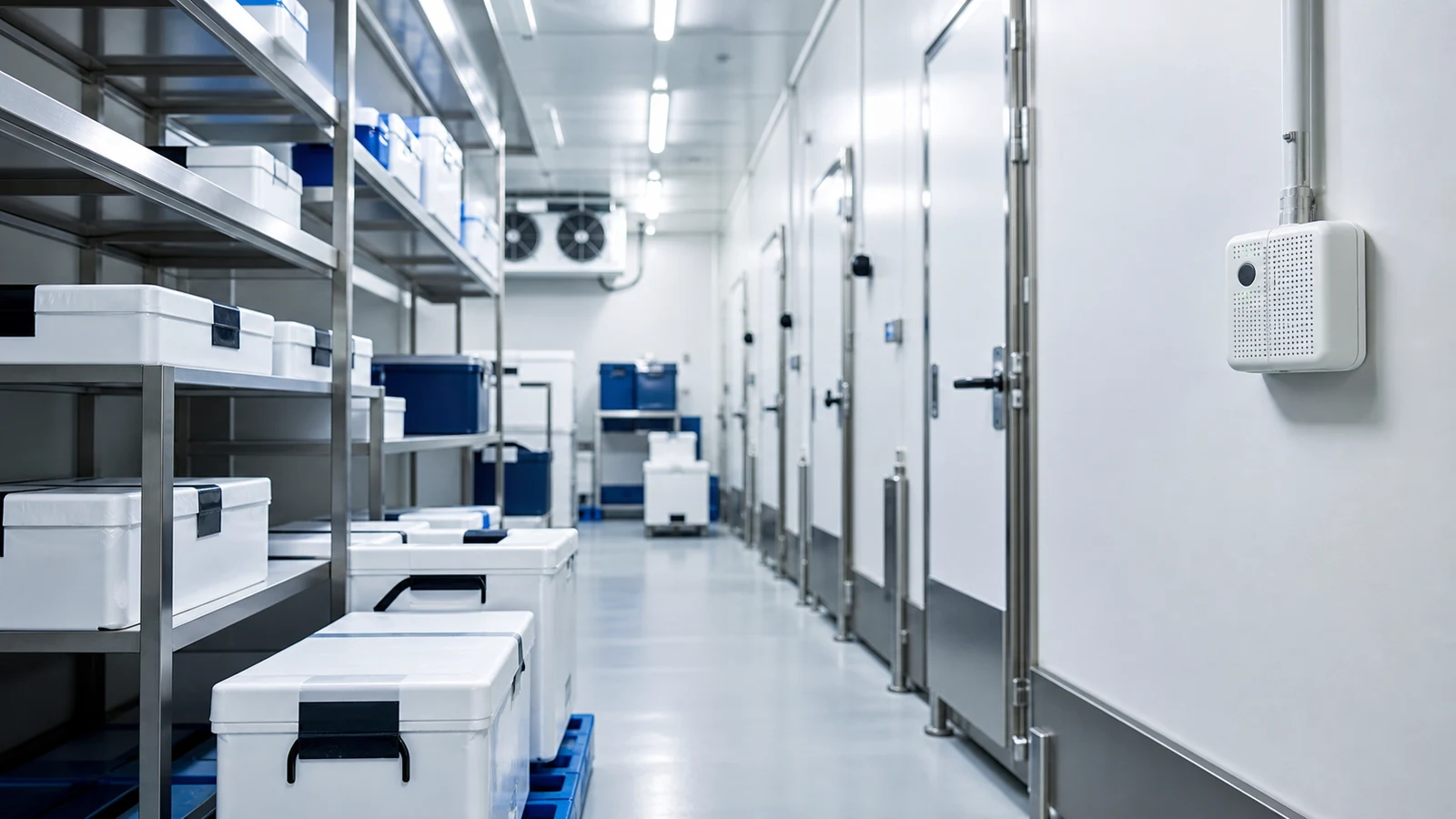
Pharmaceutical products may pass through warehouses, staging areas, vehicles and handover points before reaching the patient. Each stage can introduce temperature, humidity, security or delay risks. Smart monitoring helps organisations preserve a continuous environmental history across that journey and respond when conditions depart from the approved plan.
Define the controlled journey
Monitoring should begin with product requirements, mapped storage conditions, route risks and the customer's approved procedures. Sensors can then be assigned to rooms, equipment or consignments with clear limits, reporting intervals and escalation rules rather than generic alarm settings.
Seasonal temperature mapping remains important for understanding hot and cold locations and qualifying sensor placement. Routine monitoring continues the evidence after mapping; it does not replace facility qualification or the customer's validation responsibilities.
Retain evidence through storage and transit
Temperature and humidity records show the environment experienced by stored or transported goods. Location, light and door or opening events may add context about route and handling, while local buffering protects the record through communication gaps.
Nvirosense™ links device identity, readings, alerts and handovers so that a reviewer can reconstruct the relevant interval. Reports support GxP investigation and audit readiness without turning the platform into the authority that declares product acceptable.

Respond to excursions with context
A timely alert can prompt staff to inspect a cold room, protect a shipment or investigate a delayed delivery. The record should show when the condition started, its duration and extent, who acknowledged it and what action followed.
Product impact, deviation disposition and release require authorised quality review against stability data, specifications and the quality management system. Monitoring provides evidence for those decisions; it does not make them.
Learn from distribution and stability data
Aggregated trends can reveal recurrent route delays, loading practices, equipment cycling or seasonal weak points. Operations teams can use that information to refine logistics and maintenance, then compare later journeys to determine whether the change improved control.
Environmental histories may also contribute evidence to stability and shelf-life programmes when collected under the applicable protocol. Formal conclusions remain subject to approved scientific and quality processes.
Connected monitoring makes pharmaceutical storage and distribution more observable, but its greatest value is disciplined evidence. It helps teams act sooner and investigate more completely while leaving GxP approval, compliance and product-release authority exactly where they belong.