

May 24, 2023
Indoor Air Quality Monitoring with IoT
Connected indoor-air monitoring reveals how occupancy, ventilation and external conditions change shared spaces, supporting proportionate facilities decisions.
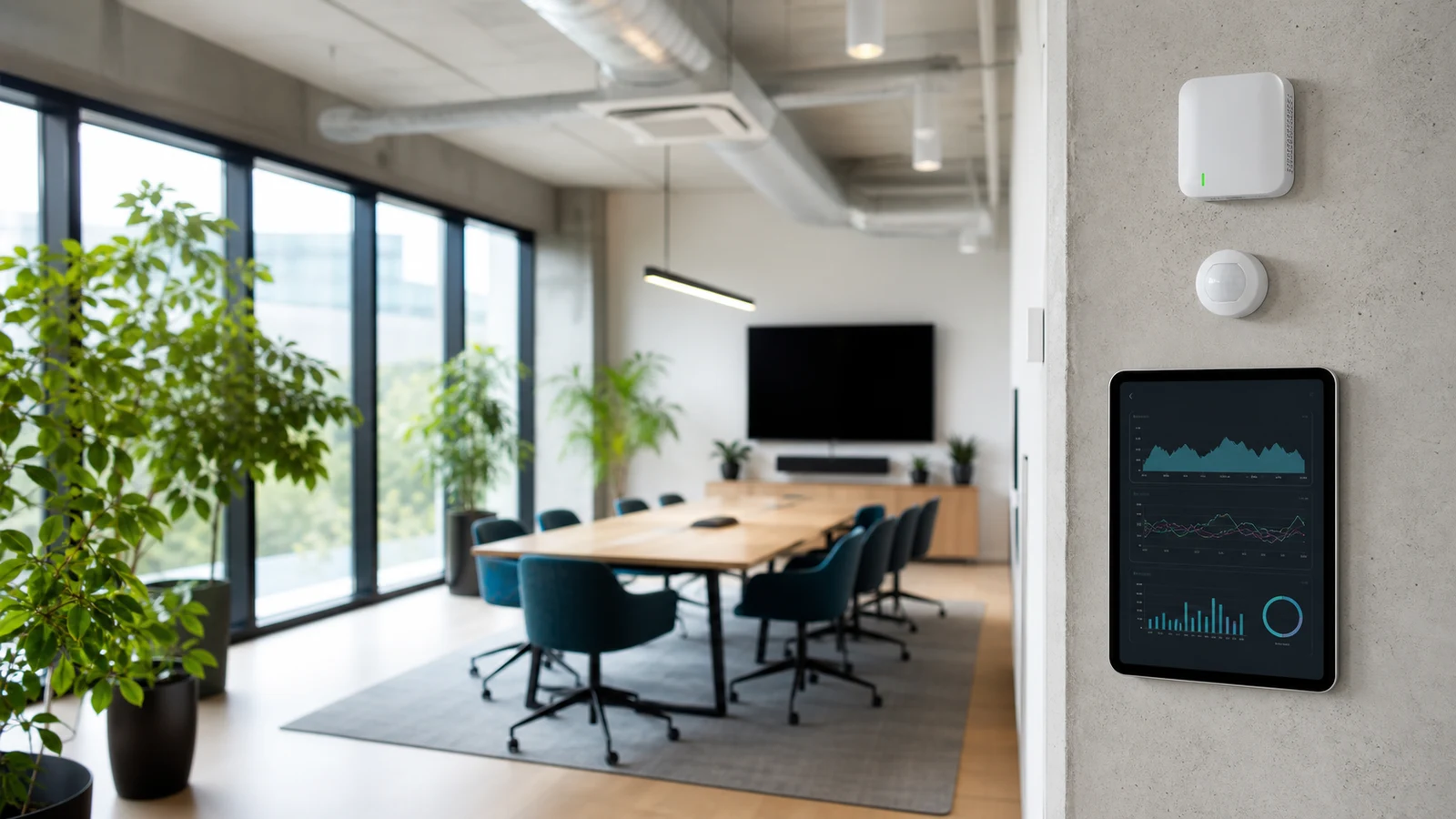
Indoor air is dynamic. A meeting room can move from quiet and well ventilated to crowded within minutes, while weather, traffic, cleaning activities and HVAC performance alter conditions throughout the day. Periodic inspection alone rarely captures that pattern.
Choose measurements that answer a facilities question
Temperature and relative humidity describe comfort and moisture conditions. Carbon-dioxide trends can provide a useful indication of ventilation in occupied spaces, while particulate matter and total volatile organic compound sensors may help identify changing pollutant loads. No single parameter is a complete measure of health or air quality.
The monitoring plan should therefore begin with the building, its occupants and the decisions facilities staff can take. Sensor capabilities, placement and limitations must be understood, and specialist assessment or reference methods may be needed where occupational exposure or health compliance is being evaluated.
Patterns matter more than an isolated peak
A short peak during cleaning has a different explanation from a daily rise that follows room occupancy. Nvirosense™ retains time-series data so teams can compare readings with booking schedules, people counts, door events, outdoor conditions and ventilation operation. This context helps distinguish recurring operational patterns from one-off anomalies.
Alerts can draw attention to a sustained or significant change, but thresholds should be selected cautiously for the use case. Consumer-grade sensors and indicative measurements should not be presented as medical diagnoses or definitive evidence of regulatory compliance.
Use demand evidence to guide ventilation
Occupancy and environmental trends can support demand-responsive ventilation where the building system is designed for it. Increasing airflow during heavily used periods and avoiding unnecessary conditioning when areas are empty may improve comfort and energy performance together. Any automated control needs safe bounds, commissioning and facilities oversight.
Monitoring can also show whether the intervention had the intended effect. Comparing conditions before and after a filter change, damper adjustment or occupancy policy gives teams an evidence-based way to refine the response.
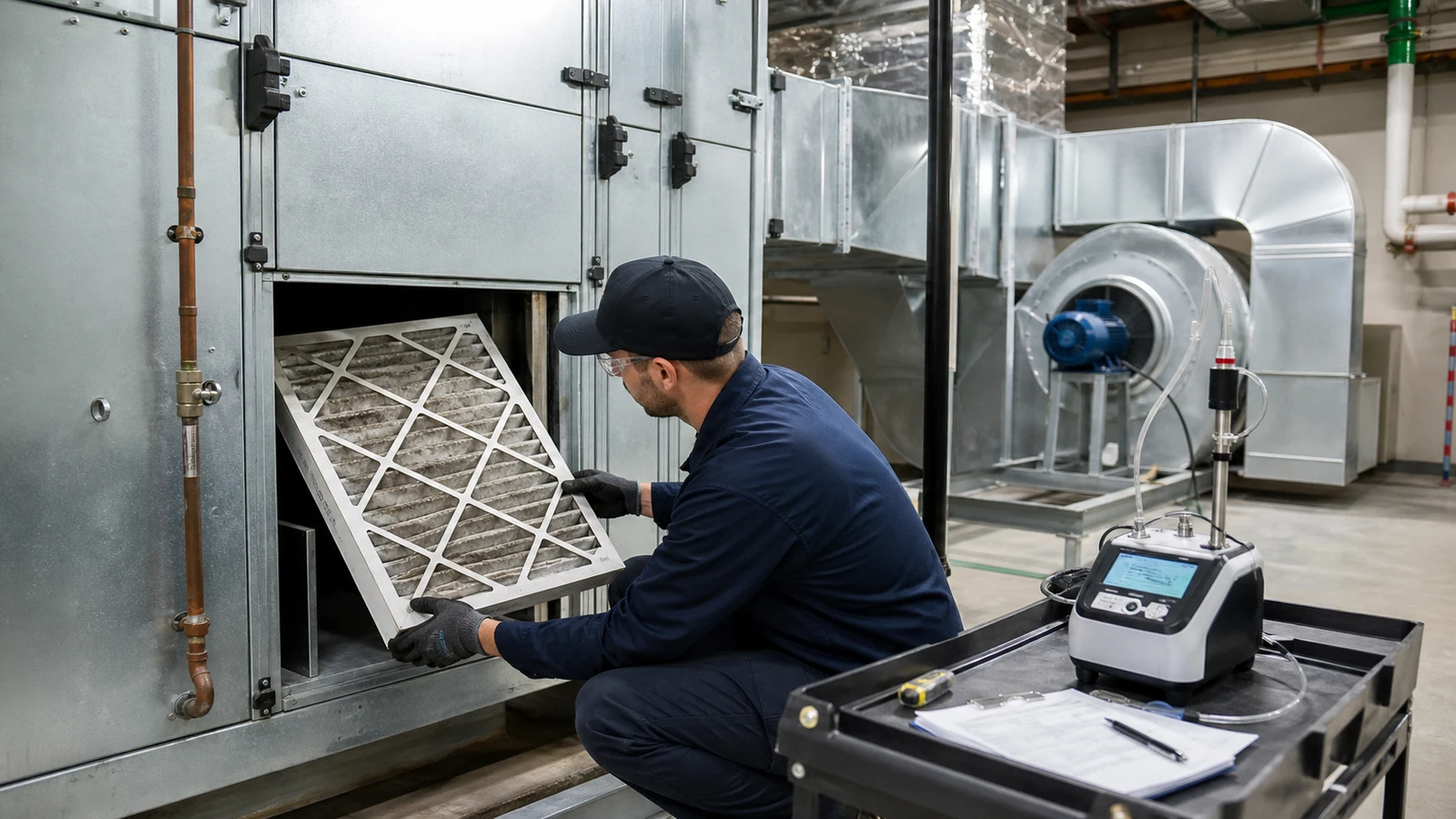
Watch the condition of the HVAC system
Poor indoor conditions may reflect blocked filters, failed fans, inadequate outside-air delivery or equipment cycling. Bringing air-quality readings together with HVAC status and maintenance records helps technicians investigate the system rather than treating every alert as a room problem.
Trend evidence supports planned maintenance and can reduce unnecessary call-outs, although it does not replace statutory inspections or competent mechanical assessment. The record should show what changed, who responded and when the equipment returned to its expected operation.
Make air-quality work accountable
Indoor-air initiatives are strongest when occupants know how concerns are reported and facilities teams can document their response. Dashboards, alerts and reports provide visibility, while retained acknowledgements and work notes create traceability from observation to action.
This approach turns IoT from a collection of room sensors into a practical decision-support layer. It helps organisations prioritise spaces, test improvements and communicate from evidence without making claims the instruments cannot support.
Healthier indoor environments depend on ventilation, source control, maintenance and responsible building operation. Connected monitoring contributes by showing when and where conditions change, enabling facilities teams to investigate and improve the space with a clear historical record.