
February 23, 2023
Fine-Wine Environmental Management
Vineyard weather, soil and rainfall records help grape producers manage frost, irrigation and crop-protection decisions from site-specific evidence.
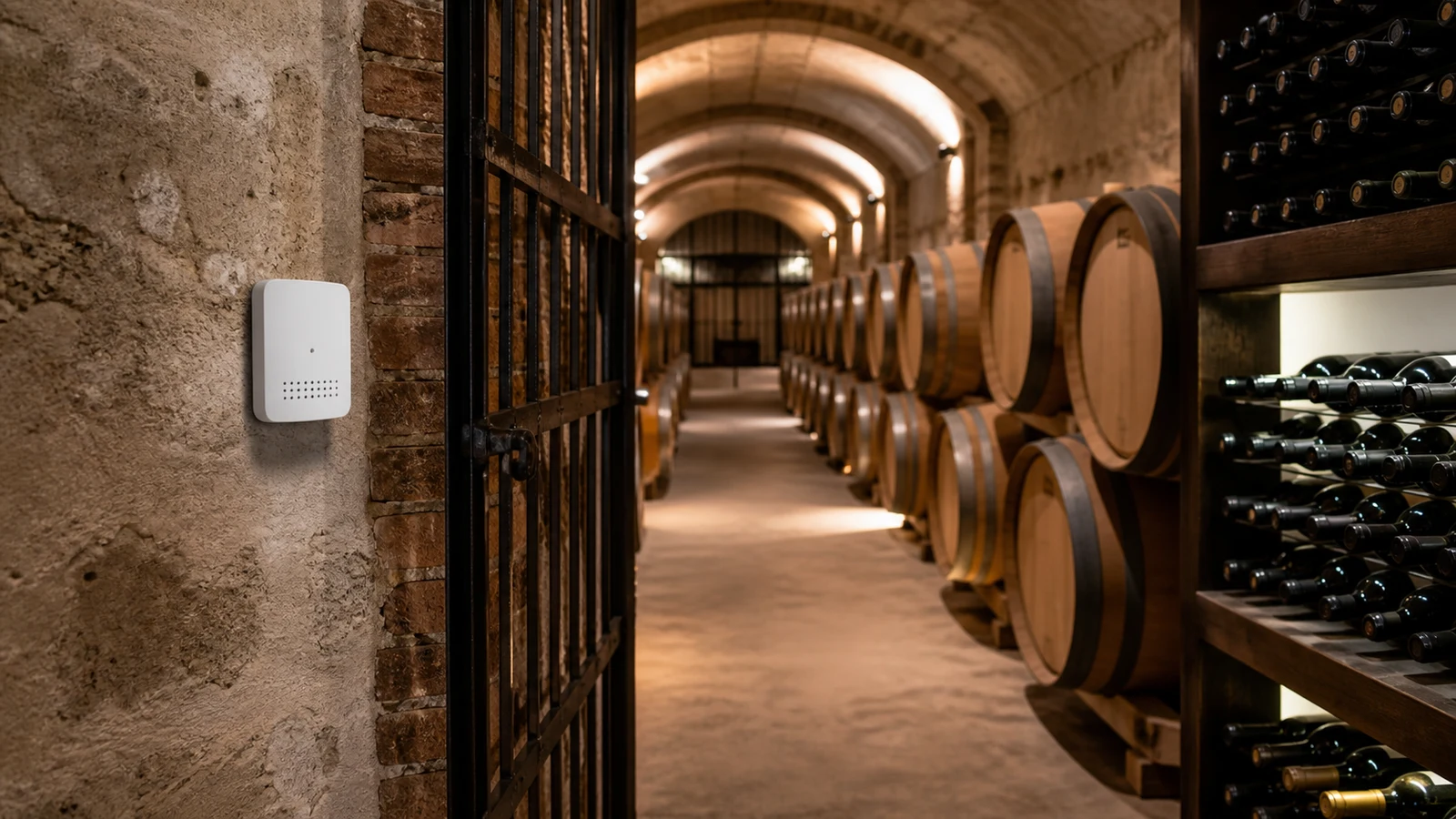
Fine wine begins with conditions in the vineyard. Warmth, winter cold, rainfall, soil water, light and wind all influence the vine, yet their pattern can vary across slopes and blocks that appear close together on a map.
A vineyard needs its own weather history
Regional weather describes the broader day; an on-farm station records what the vines actually experienced. Air temperature, humidity, rainfall, wind speed and direction, solar conditions and soil moisture can be sampled at useful intervals and retained for comparison across the growing season.
Distributed sensor nodes extend that view into blocks with different elevation, aspect or soil. Nvirosense™ keeps the readings associated with their location so a viticulturist can compare local conditions rather than blending the whole property into one average.
Frost response depends on timing
During a frost-risk period, a rapidly falling temperature can matter as much as the current value. Live trends and configured alerts give responsible staff time to inspect the block and activate the farm's approved protection method when appropriate. A trace also shows how quickly the temperature changed and how the site responded.
Sensors do not predict frost damage on their own, and alarm thresholds should reflect cultivar, growth stage, position and local practice. Their role is to replace chance observation with earlier, site-specific evidence.
Rainfall changes crop-protection planning
Rain gauges help teams record when rain began, how much fell and how long conditions remained wet. When that evidence is combined with leaf wetness and spray records, agronomists can assess whether rainfall may have affected a crop-protection programme and decide what field inspection or action is justified.
The monitoring record should not be used to make blanket pesticide recommendations. Product labels, withholding periods, competent advice and the farm's approved programme remain authoritative. Data improves the timing and traceability of the review.
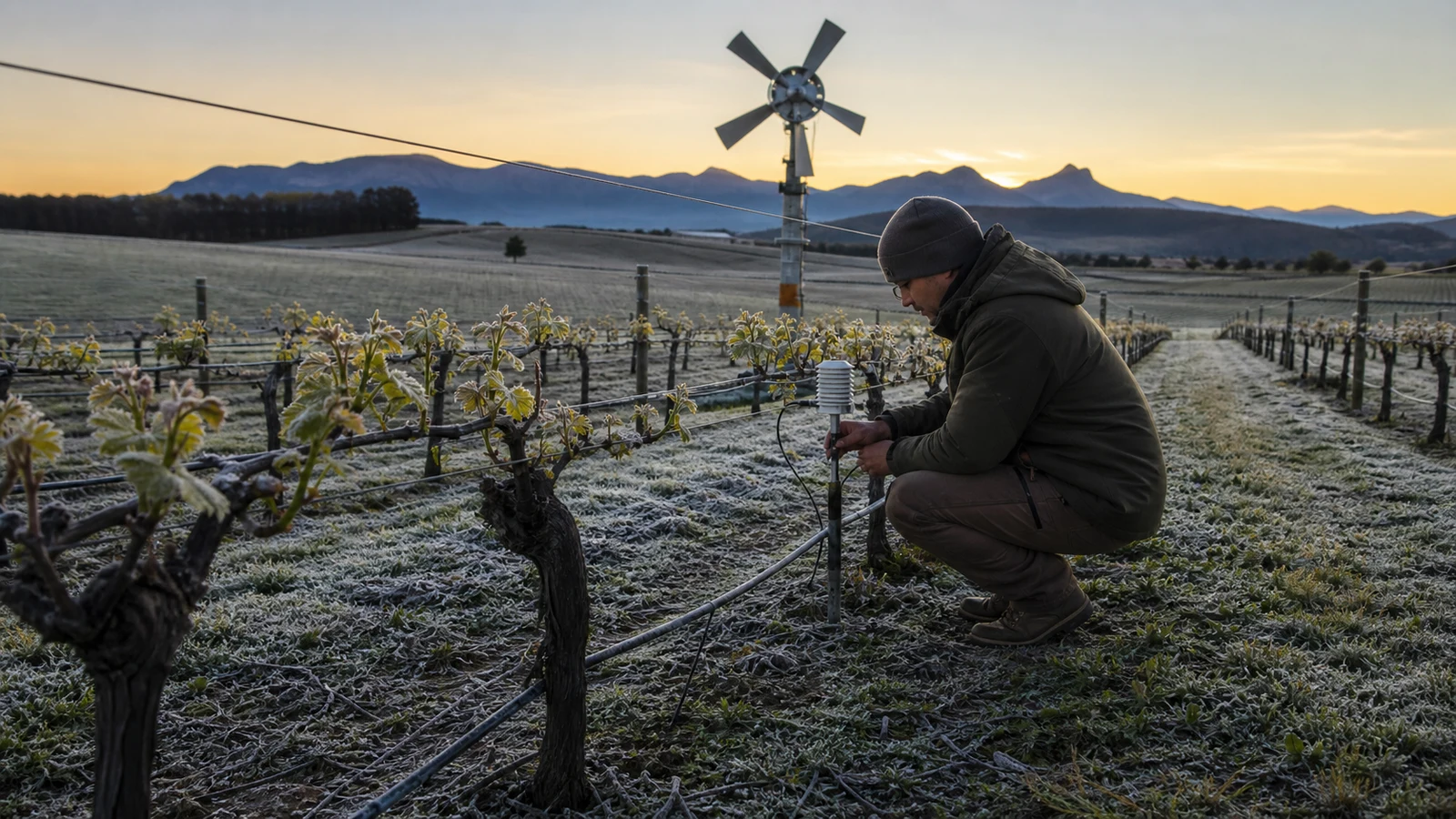
Soil evidence makes irrigation more selective
Soil-moisture probes show how water moved into and through the measured profile after rain or irrigation. Comparing blocks can reveal where a fixed schedule is delivering too much, too little or at the wrong time, supporting more selective allocation during constrained periods.
Pump state, flow and weather provide necessary context. If soil moisture does not respond as expected, the cause may be a valve, emitter, placement issue or soil variability rather than crop demand alone.
Carry field learning into the vintage
Long-term records allow vineyard teams to compare environmental patterns with phenology, harvest timing, fruit observations and production outcomes. They can document what preceded a difficult season and evaluate whether a change in irrigation or frost practice improved control.
Remote visibility reduces routine travel across large properties, but devices still require inspection, calibration checks and maintenance. A trustworthy history depends on knowing when the sensor itself was healthy.
Connected vineyard monitoring does not make the wine or replace the viticulturist. It gives the people responsible for the vines an earlier warning, a stronger seasonal memory and defensible evidence for managing water, weather and field risk.