

January 28, 2023
Environmental Monitoring for Meat Processing
Traceable temperature records help meat processors examine cooking, chilling and storage conditions while supporting food-safety and process reviews.
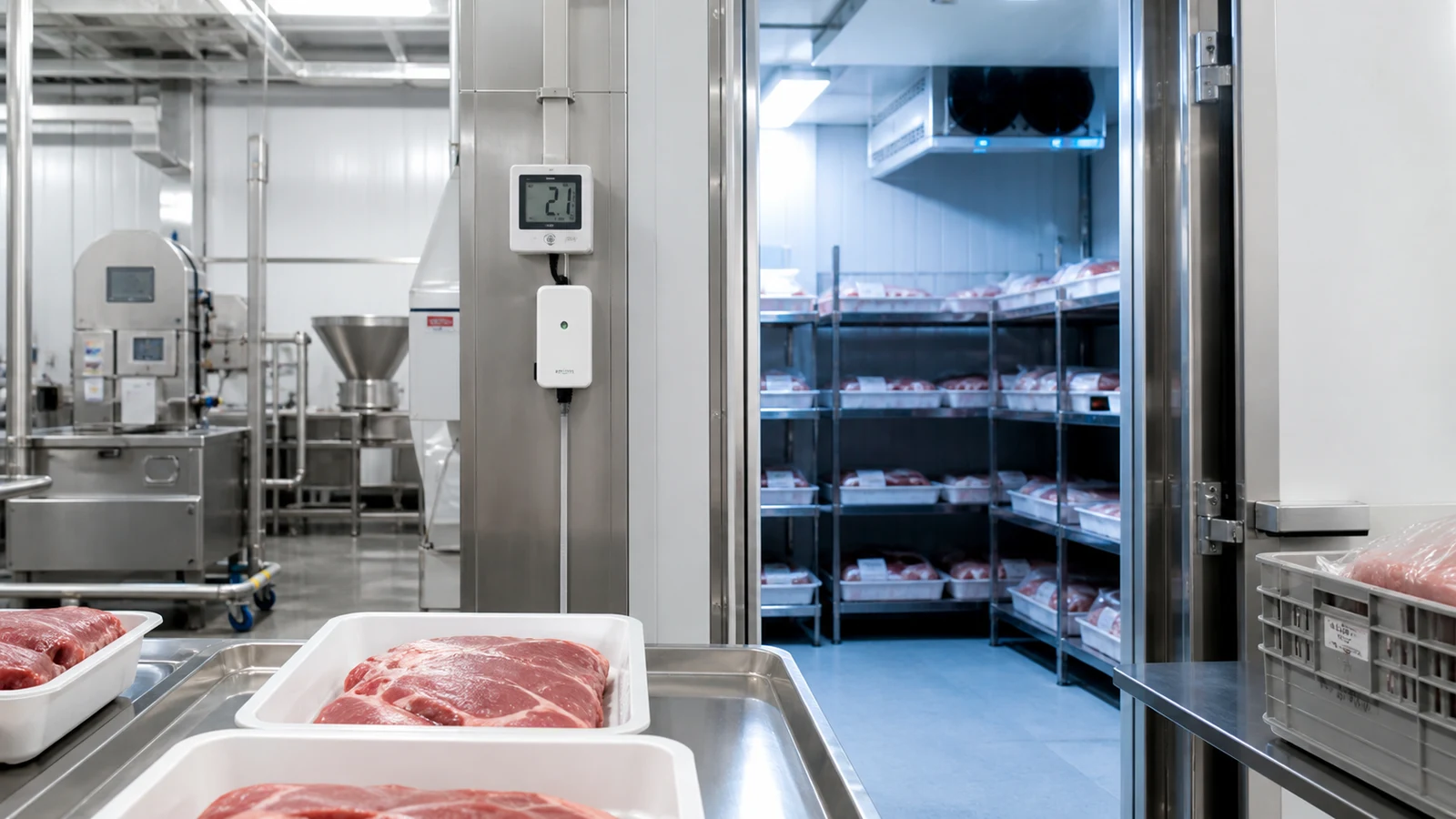
Meat and poultry processing depends on controlled temperatures through handling, cooking, cooling and storage. A reading taken at one moment cannot describe a complete cycle, and an unreliable logger may leave a critical gap. Purposeful monitoring creates a time-stamped record that process and food-safety teams can compare with approved procedures and product requirements.
Match the instrument to the process
Smokehouses, chillers and processing areas present different ranges, moisture conditions and installation challenges. The selected logger and probe must be suitable for the expected temperature, response time and cleaning environment. HOBO U12 models, for example, can support compatible temperature probes over a broad stated range, but the complete measurement chain and placement still need verification for the intended use.
Battery status, memory capacity, sampling interval and time synchronisation should be checked before a run begins. Simple launch and USB readout through software such as HOBOware can reduce handling complexity, while a documented pre-use check protects against discovering an expired battery after a long study.
Capture product and chamber conditions
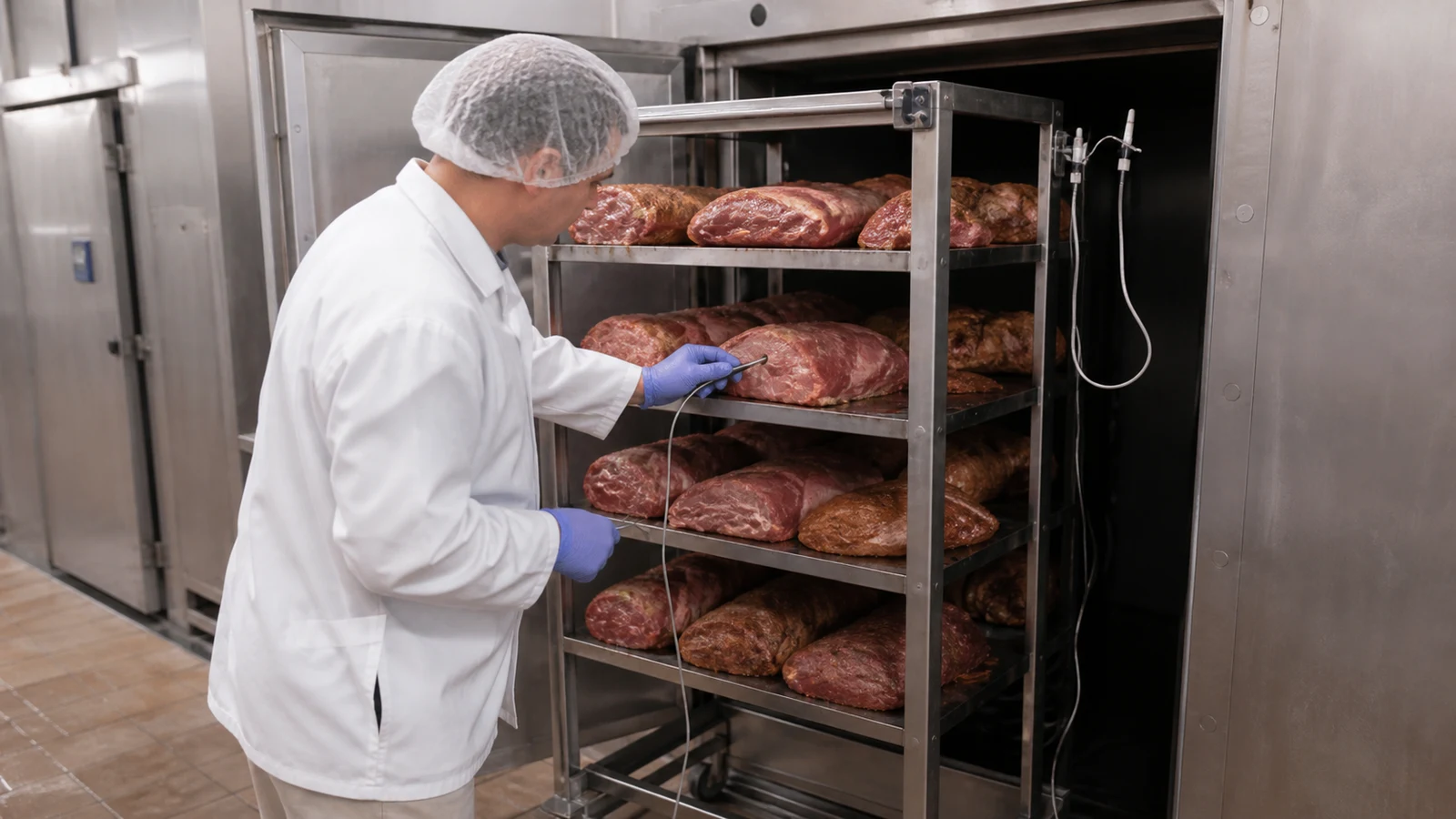
Dry-bulb and wet-bulb measurements can describe the oven or smokehouse environment, while appropriate probes may record surface or core temperatures. These data streams answer different questions and should not be treated as interchangeable. The batch, recipe, probe location, start time and relevant equipment state give the graph its operational meaning.
Nvirosense™ can organise readings and events into a shared timeline. Teams can see heating and cooling rates, compare runs and identify where a process departed from its expected pattern. Alerts may speed awareness, but product disposition should follow the site's approved food-safety and quality procedures.
Support safety and process improvement
Cooking evidence may be assessed against the organisation's validated process and applicable food-safety requirements, including relevant guidance where adopted. Monitoring supports that assessment; it does not independently certify that pathogens have been controlled. Calibration status, probe performance and the representativeness of the measured product remain important.
The same history can improve consistency. In a smokehouse, teams may compare the time taken for product temperature to rise with drying, denaturing and colour-development observations. Repeated evidence can help isolate changes in load, airflow or recipe execution.
Keep the record traceable
Clear device names, calibration references and protected exports make a study easier to review later. Exceptions should retain acknowledgement and investigation notes rather than disappearing once conditions return to normal.
A dependable record gives production, maintenance and quality teams the same evidence. That shared view helps them decide whether to adjust a process, inspect equipment or collect further data.
Well-designed temperature monitoring strengthens both food-safety review and day-to-day process learning. By connecting logger data with batch and event context, Nvirosense™ helps meat processors preserve the evidence behind each decision.