

July 14, 2023
Environmental Monitoring for Greenhouse Optimisation
Root-zone, climate and equipment records help greenhouse growers stabilise conditions, use inputs carefully and investigate crop risk earlier.
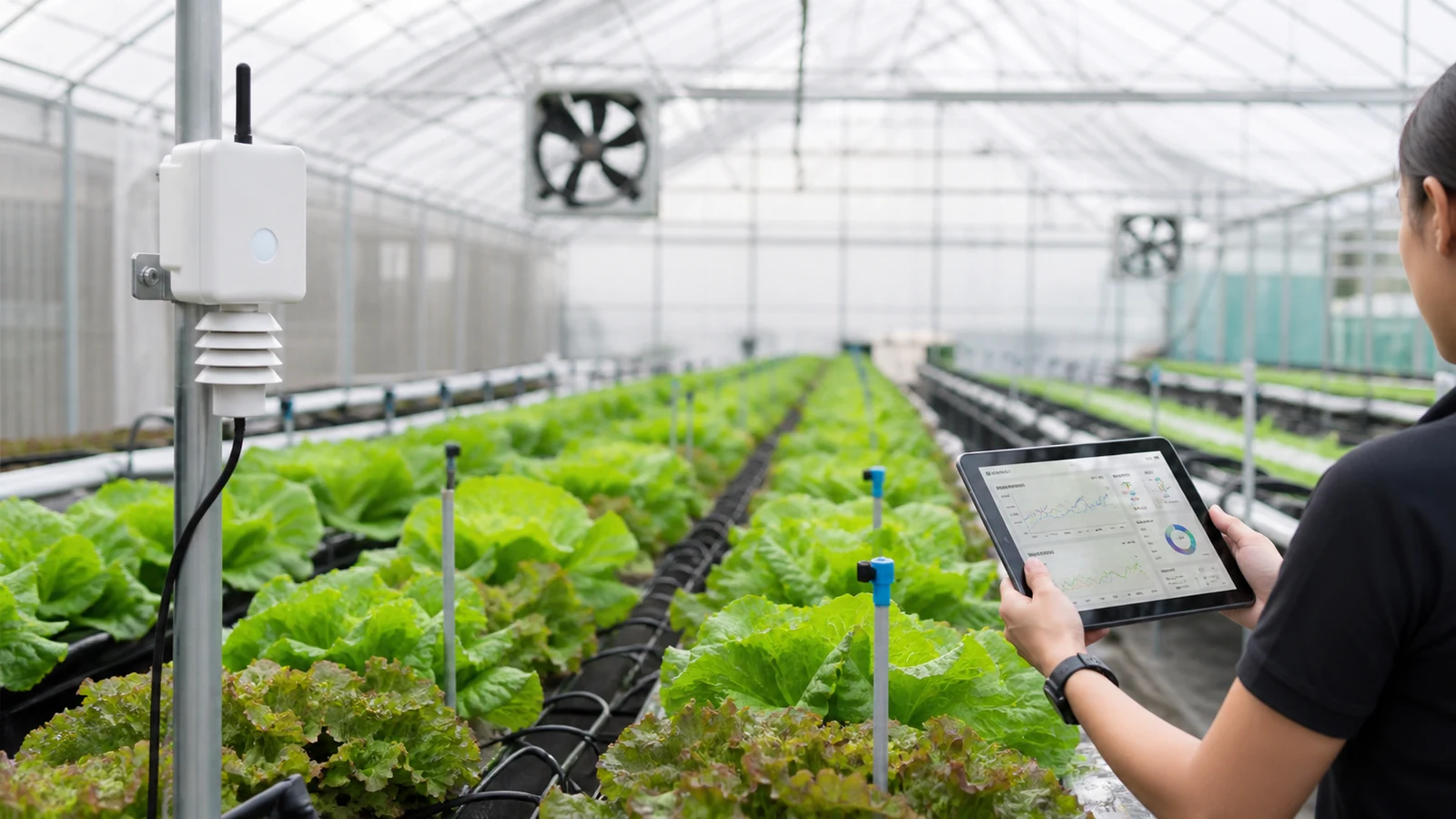
A greenhouse protects crops from some external variability, but it also concentrates responsibility for the growing environment. Heat, humidity, carbon dioxide, light and irrigation can change quickly inside the structure. Continuous monitoring helps growers see those interactions and manage the house as a connected biological system.
Build a representative sensor network
Conditions near a vent, door or heater may differ from those at canopy level in the centre of the house. Wireless sensors can sample several zones without extensive cabling, but placement should reflect crop height, airflow, irrigation layout and known hot or wet spots.
Low-power operation and reliable data transfer matter in a working greenhouse. Local buffering protects readings through short communication gaps, while Nvirosense™ gives growers a continuous view and retains the device context needed to identify a failed or drifting sensor.
Balance air, carbon dioxide and light
Photosynthesis depends on light and carbon dioxide, while ventilation used to manage carbon dioxide also changes temperature and humidity. Looking at these variables together helps growers understand why the crop environment moved rather than adjusting one system in isolation.
Light measurements can support supplemental lighting and shading decisions, and may add context to irrigation and nutrient demand. Targets remain crop- and stage-specific; the platform provides evidence, while the production team sets the horticultural strategy.
Manage water from the root zone
Soil or substrate moisture and water-level sensors can reveal whether plants received the intended irrigation and whether storage remains sufficient. Trends help detect blocked emitters, zones that dry too quickly and cycles that continue after the root zone is already wet.
Combining moisture with temperature, humidity and weather conditions supports more proportionate scheduling. This can reduce unnecessary water and nutrient loss, but it does not remove the need to inspect roots, drainage and plant condition.
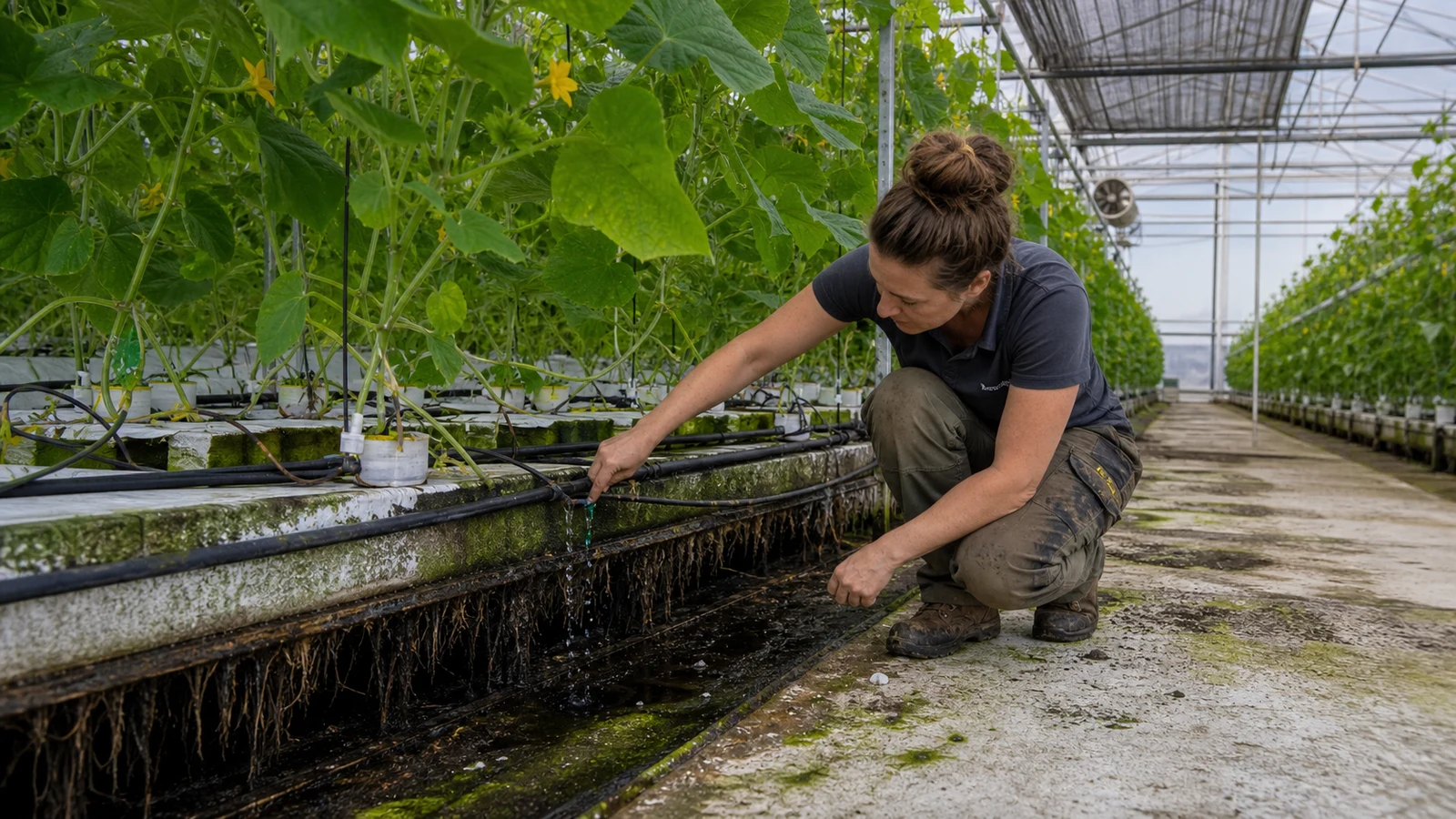
Use humidity as a disease-risk context
High humidity and prolonged surface moisture can create conditions favourable to disease, while air that is too dry can stress crops. Sensors show the duration and distribution of these conditions, allowing staff to focus ventilation, heating, misting or inspection on the affected period and zone.
Alerts should reflect persistence and crop sensitivity rather than every brief fluctuation. A traceable response record helps the team compare suspected disease periods with what the environment actually did.
Automate within safe operating rules
I/O controllers may connect sensing with irrigation, lighting, ventilation or heating. Automation can respond faster than a manual round, but it should operate inside documented limits with clear overrides, equipment status and escalation when the expected response does not occur.
Historical analytics then show whether a control action stabilised the house and how much resource it used. Across production cycles, that evidence supports yield review, crop planning and targeted improvements without promising that environmental control alone determines the harvest.
Greenhouse optimisation comes from understanding the relationships between crop, climate, water and equipment. Connected monitoring makes those relationships visible, helping growers intervene sooner, conserve resources and carry a dependable environmental history into each production review.