

October 25, 2023
Environmental Monitoring for Cryostorage Applications
Cryostorage monitoring links ultra-low-temperature evidence, equipment state, alarms and response records across critical sample repositories.
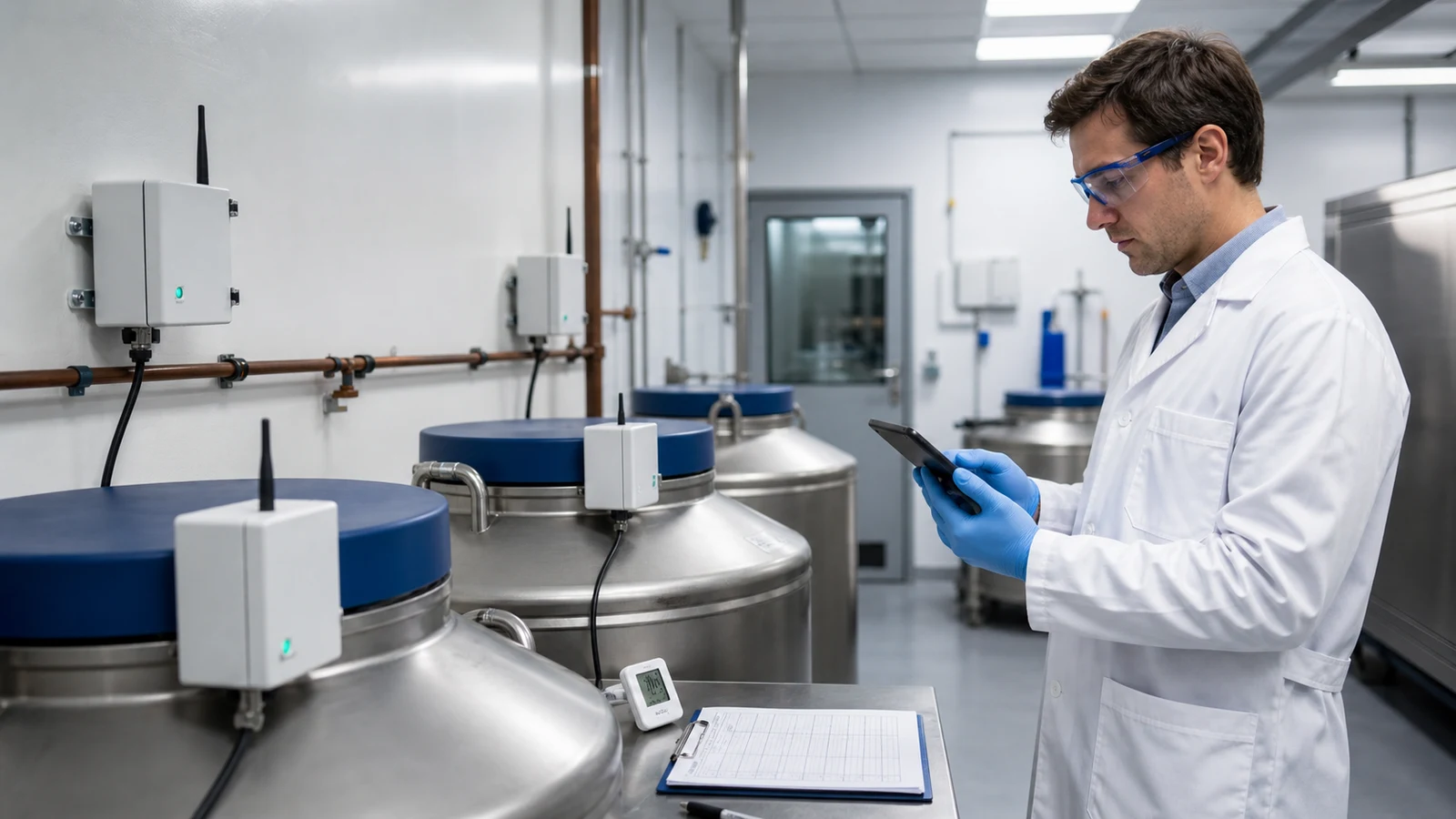
Cryostorage protects biological material such as blood, tissue, cells and DNA at extremely low temperatures, often at or below -150°C for vapour-phase systems. At those conditions, a storage failure may develop out of sight and the contents may be difficult or impossible to replace. Effective monitoring therefore needs more than a periodic manual reading: it needs independent evidence, timely escalation and a record of how people responded.
Monitor the storage system, not one number
Temperature is essential, but useful oversight may also include liquid-nitrogen level, lid or door state, power, controller status and the environment around the vessel or freezer. Independent probes can provide a separate monitoring path from the equipment controller. Sensor type, range and placement must suit the specific cryogenic application and the facility's risk assessment.
Trends matter because a changing refill pattern or gradual warming rate can indicate a developing issue before a critical threshold is crossed. Nvirosense™ keeps those time series associated with the correct unit and location.
Design alarms around response
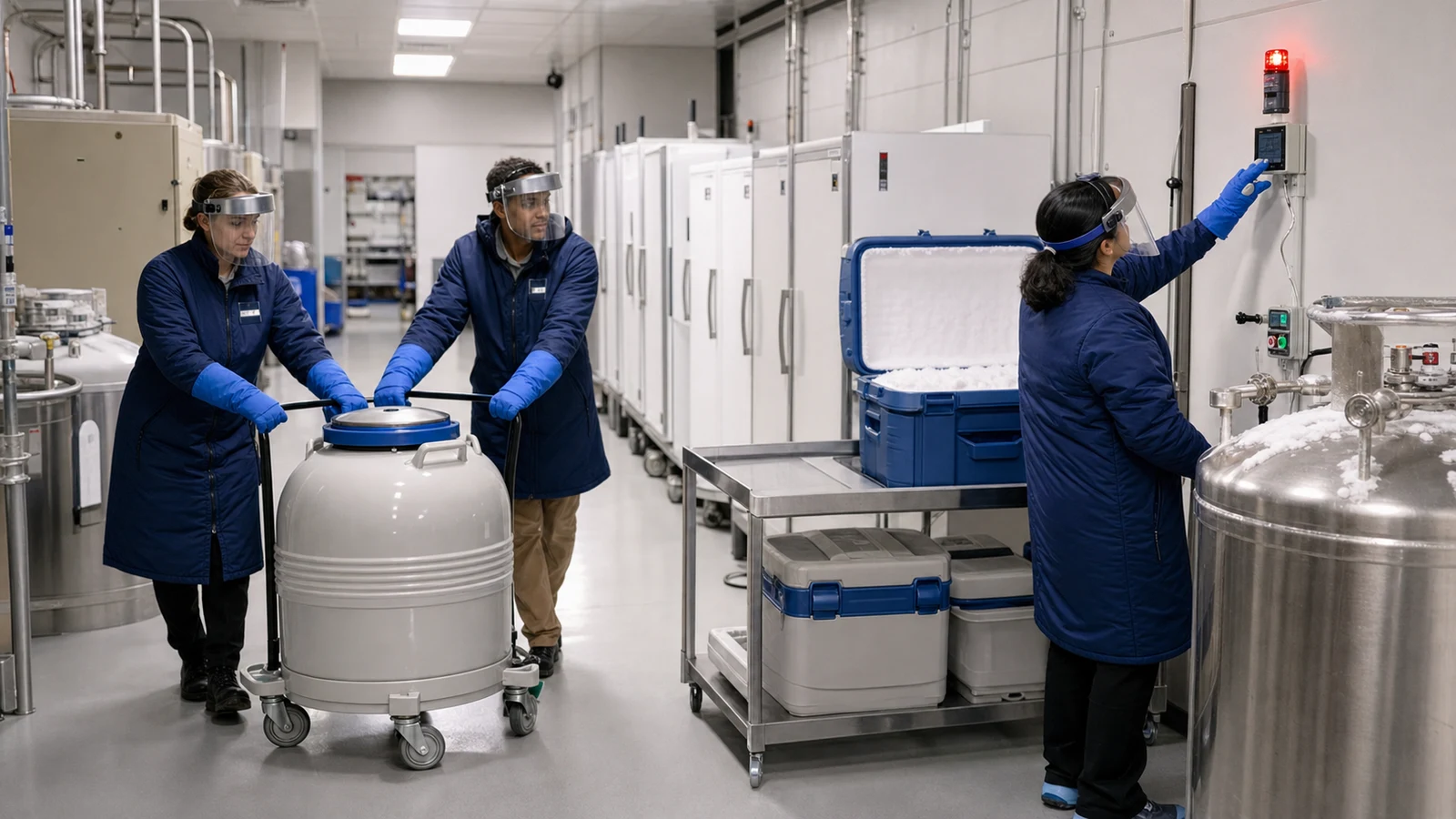
An alarm only protects material when it reaches an authorised person who knows what to do. Escalation paths should reflect working hours, staff availability and the time available to intervene. Alarm delays and thresholds need to avoid nuisance notifications without masking a genuine deterioration.
Acknowledgements, comments and response times provide an operational trail. They help a laboratory review whether the procedure worked and where training, maintenance or escalation needs improvement.
Keep evidence through connectivity gaps
Repositories may span several rooms, buildings or sites. Remote dashboards make this estate visible in one place, but local data retention remains important if a network path fails. Buffered readings can synchronise when service returns, while device-health checks distinguish a stable chamber from a silent monitor.
Access controls, audit trails and protected records support review in regulated or research environments. The organisation remains responsible for qualification, validation and sample-disposition decisions; monitoring provides the evidence used within those processes.
Plan for the abnormal day
Teams should test contact lists, backup storage, transfer routes and emergency supplies before an incident. A drill can expose practical gaps such as insufficient capacity, inaccessible keys or a response that depends on one person.
Historical Nvirosense™ data can support maintenance planning and post-event reconstruction, connecting the initial change, alarm, intervention and recovery in one timeline.
Modern cryostorage is strengthened by continuous, independent and reviewable monitoring. When equipment status, environmental readings and human response are connected, custodians gain the evidence needed to protect critical material and improve the resilience of every storage site.