

October 18, 2023
Environmental Control for Cultural Heritage Protection
Museums, galleries and archives need stable, traceable environmental conditions that reflect the sensitivity of each collection and building.
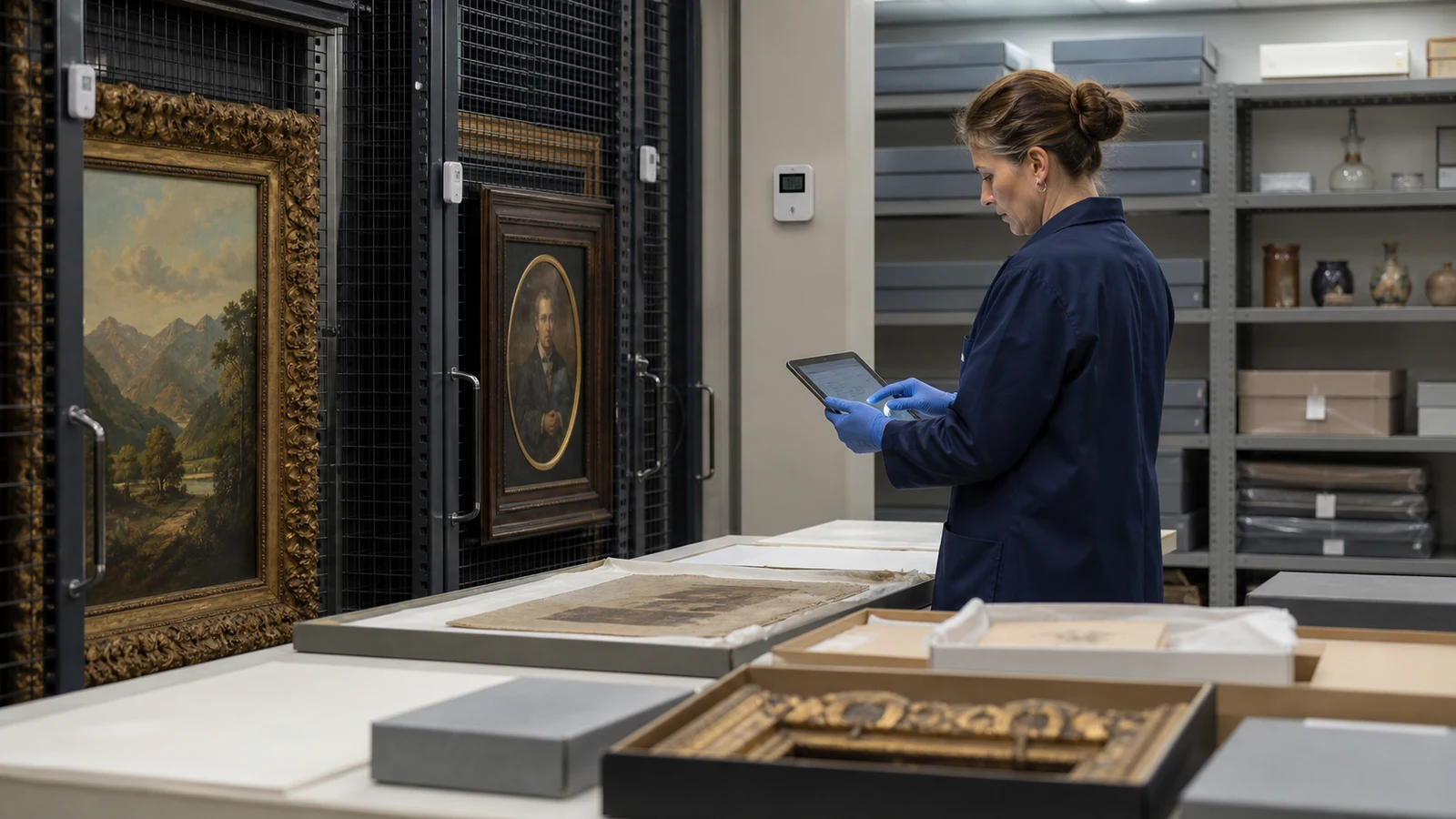
Cultural collections are made from materials that continue to respond to their surroundings. Paper, canvas, wood, textiles, metals and photographic media expand, contract, corrode or support biological growth in different ways. Preservation is therefore not achieved by choosing one universal room setting. It begins with understanding the collection, the building and how conditions change as visitors, weather and mechanical systems interact.
Stability matters more than a generic target
Temperature and relative humidity influence chemical decay, dimensional movement and mould risk. A broad 45–55% relative-humidity range is sometimes used as a planning reference, but acceptable conditions and rates of change should be set by conservation specialists for the materials and local context. Rapid fluctuations can be as important as an average value.
Older buildings present particular challenges. Limited vapour control, thick walls, leaky openings and constrained HVAC routes may make aggressive conditioning impractical or harmful. Monitoring shows the building's real seasonal behaviour before interventions are selected.
Measure rooms, cases and visitor effects
A gallery reading does not necessarily represent a sealed display case, an archive shelf or a wall exposed to sunlight. Sensors should be placed around the risks being managed, with location metadata and sufficient history to compare spaces. Occupancy and door activity can help explain short changes during public hours.
Nvirosense™ dashboards can bring room and case measurements together, issue alerts for sustained departures and preserve annotations when exhibitions or HVAC settings change. That record helps conservators separate a one-off event from a recurring pattern.
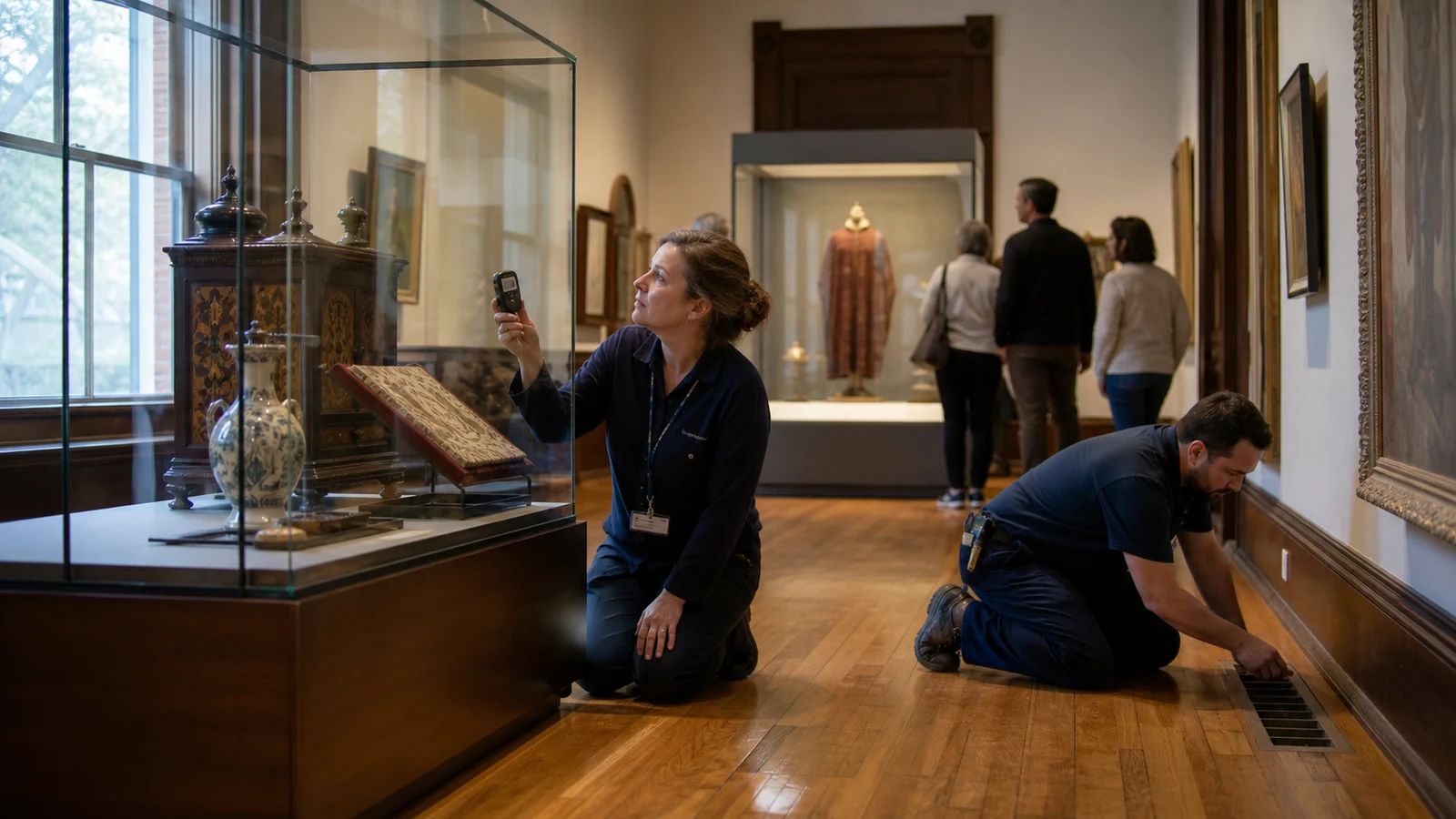
Choose environmental control to fit the building
Humidification may use steam, evaporation from wetted media or other engineered methods, each with maintenance and control implications. Fine mist can be difficult to manage near sensitive material. Ventilation must balance visitor comfort, indoor air quality and preservation needs while avoiding conditions favourable to mould.
Smart controls can respond to measured conditions, but limits and fail-safe behaviour should be agreed with conservation and building professionals. Nano-coatings or other material treatments may offer protection in some cases, yet they require collection-specific assessment and do not remove the need for environmental evidence.
Turn trends into conservation decisions
Analytics can identify seasonal cycles, repeated peaks and differences between rooms. Air-quality measurements may add context where pollutants or dust threaten a collection. Predictive tools can prioritise inspection or plant maintenance, while the underlying readings remain available for expert review.
Preservation remains a shared responsibility among conservators, curators, facilities teams and scientists. A traceable monitoring record gives those disciplines a common account of what occurred and what changed after an intervention.
Environmental control protects heritage best when it is measured, proportionate and specific to the collection. By connecting local sensors, alerts and long-term trends, Nvirosense™ helps cultural institutions detect harmful patterns, document their response and plan practical improvements without losing sight of conservation expertise.