

June 04, 2026
Environmental Chain-of-Custody for the Modern Cold Chain
A continuous environmental record connects production, storage, transport and handovers so cold-chain teams can investigate quality events with evidence rather than isolated snapshots.
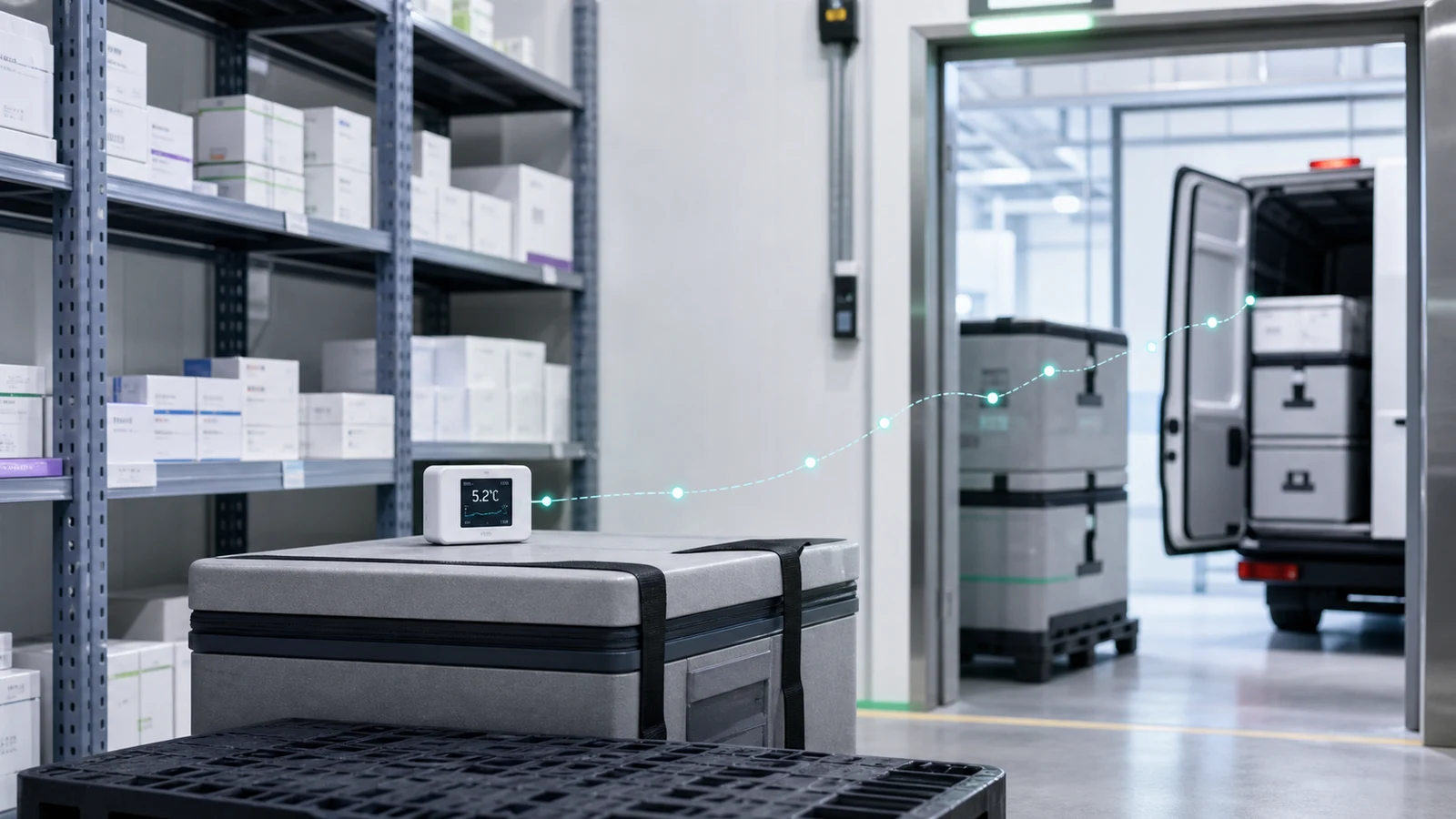
A cold chain can account for every pallet movement and still struggle to explain why product condition changed. Dispatch scans, batch identifiers and delivery signatures establish possession, but they do not describe field heat, pre-cooling, door dwell or the environment inside a refrigerated vehicle. Environmental chain-of-custody closes that gap. It gives each lot a continuing condition history that starts before logistics, follows every handover and remains available when teams must decide whether an event matters.
Movement records need environmental context
Conventional traceability is built around transactions: a crop is harvested, a consignment is received, a pallet is loaded and ownership changes. Those records remain essential, particularly for recalls and supplier accountability. Their limitation is that a location or scan does not reveal the condition of the product at that moment. Two consignments may follow the same route while carrying very different thermal histories and therefore different quality risks.
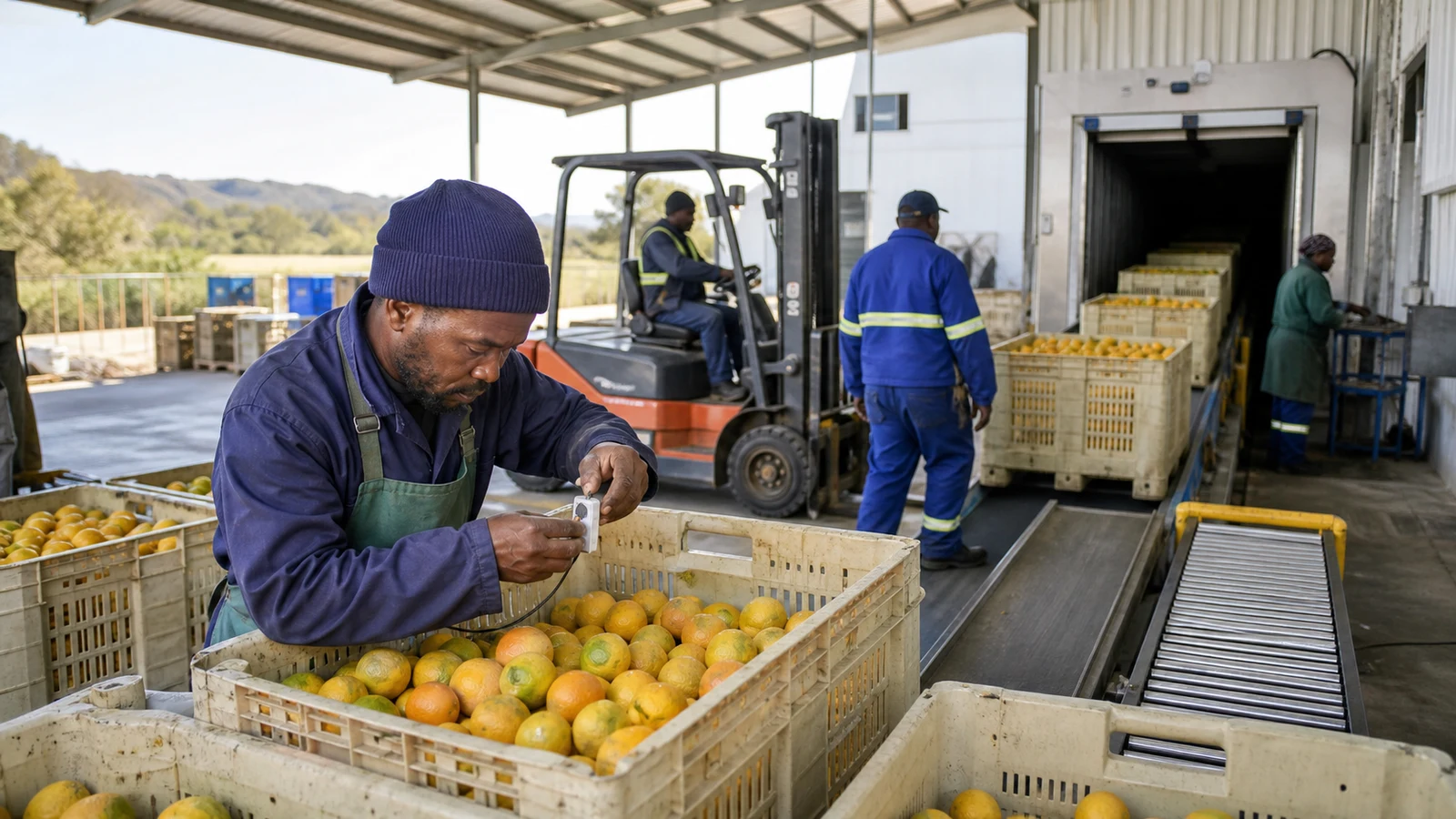
The missing context often begins upstream. Nursery conditions, irrigation patterns, block microclimate, harvest time, time in the sun and the interval before pre-cooling can all shape the starting condition of fresh produce. If the logistics record begins only at cold-room intake, investigators inherit a partial story. Nvirosense™ monitoring can bring these earlier observations into the same timeline, allowing a later exception to be considered against the state in which the lot entered the chain.
Continuity also reduces the delay between an event and a useful investigation. When production, packing and logistics teams retain separate reports, a reviewer may spend days requesting exports and reconciling clocks before analysis begins. A shared data lineage does not remove responsibility from each party; it gives them a common reference. The relevant lot, devices, facilities and journeys can be viewed in sequence, while permissions and source attribution preserve who supplied each part of the record.
Build the record at source
A useful environmental identity can start with production lineage and the conditions surrounding it. Seed or plant material, production block, weather, soil moisture, irrigation activity and harvest context form a baseline. In livestock or other biological supply chains, lineage and early-life environments can play a similar role. The objective is not to attach every available data point, but to retain the measurements and observations that could explain quality, shelf life or handling decisions later.
As the product moves through grading, processing, packhouse intake, ripening, cold storage and dispatch, each stage appends its own evidence. Timestamped telemetry, operator notes, photographs, laboratory results and exception records can remain linked to the lot or batch. A handover then becomes a continuation of the record instead of the point at which one system stops and another begins.
Credible instruments make credible evidence
A connected history is only as dependable as the measurements beneath it. Sensor suitability, installation position, time synchronisation, maintenance and calibration records all influence how confidently a reading can be used. In cold rooms and packing facilities, mapping work helps identify hot and cold locations before permanent probes are placed. In fields, representative weather and soil stations provide the local observations needed to interpret broader spatial data.
Nvirosense™ keeps telemetry alongside alarm history, device status and relevant service records so reviewers can distinguish a process event from an instrumentation issue. Calibration supports measurement traceability; it does not by itself approve a product, facility or process. Qualification, release and formal quality decisions remain governed by the customer's procedures and authorised personnel.
Join fixed sites to the journey
Transport monitoring is most valuable when it is read with what happened before and after the trip. GPS position, reefer temperature, set-point behaviour, door events, shock and route deviations can be aligned with pre-load temperature, loading-bay dwell and receiving checks. A temperature rise in transit has a different meaning when one load was fully pre-cooled and another was still carrying field heat.
A shared event timeline supports route replay, supplier comparison and focused root-cause work. It can show when an alarm occurred, whether the vehicle was stationary, how long a door remained open and what the receiving team found. Where connectivity is intermittent, local logging and backlog recovery preserve the record for later synchronisation rather than leaving a silent gap.
Add the operational causes sensors cannot see
Not every cold-chain problem begins with refrigeration equipment. Staging delays, misplaced pallets, incomplete loading, repeated door openings and handling choices can alter product condition without producing an obvious technical fault. Operational observations therefore belong beside environmental telemetry. Structured notes and workflow events can provide this context, while appropriately governed visual analytics may help verify pallet movement, loading sequence or door activity.
The value lies in correlation, not surveillance for its own sake. A temperature excursion becomes more actionable when the team can associate it with a delayed handover or an open loading bay. Nvirosense™ analytics can surface these aligned events for review, while people remain responsible for interpretation, escalation and corrective action.
From investigation to predictive decision support
Once condition history is continuous, analytics can look beyond isolated thresholds. Teams can compare lanes, facilities and suppliers; identify recurring dwell points; and examine how upstream conditions relate to later shelf-life outcomes. Satellite layers, forecasts and regional environmental datasets can add spatial context, but ground measurements remain important for checking whether those models represent local reality.
A controlled provenance view may also share selected origin, harvest and journey facts with customers or consumers. The internal record should remain more detailed, with access appropriate to commercial and quality responsibilities. Timestamped environmental evidence can strengthen authenticity checks because it links a claim to a sequence of measurements and events, yet it remains one part of a broader traceability and assurance system.
The modern cold chain is not defined only by how quickly goods move or how many checkpoints are scanned. Its strength is continuity: a defensible account of product condition from source through storage, transport and receipt. By connecting calibrated monitoring, operational events and analytical context, Nvirosense™ helps teams investigate exceptions earlier, prioritise corrective work and make handovers part of one evidence chain.