

January 19, 2024
Data Integrity in Pharmaceutical Environmental Monitoring
Complete, attributable and reviewable environmental records help pharmaceutical teams support quality decisions and reconstruct what happened when conditions changed.
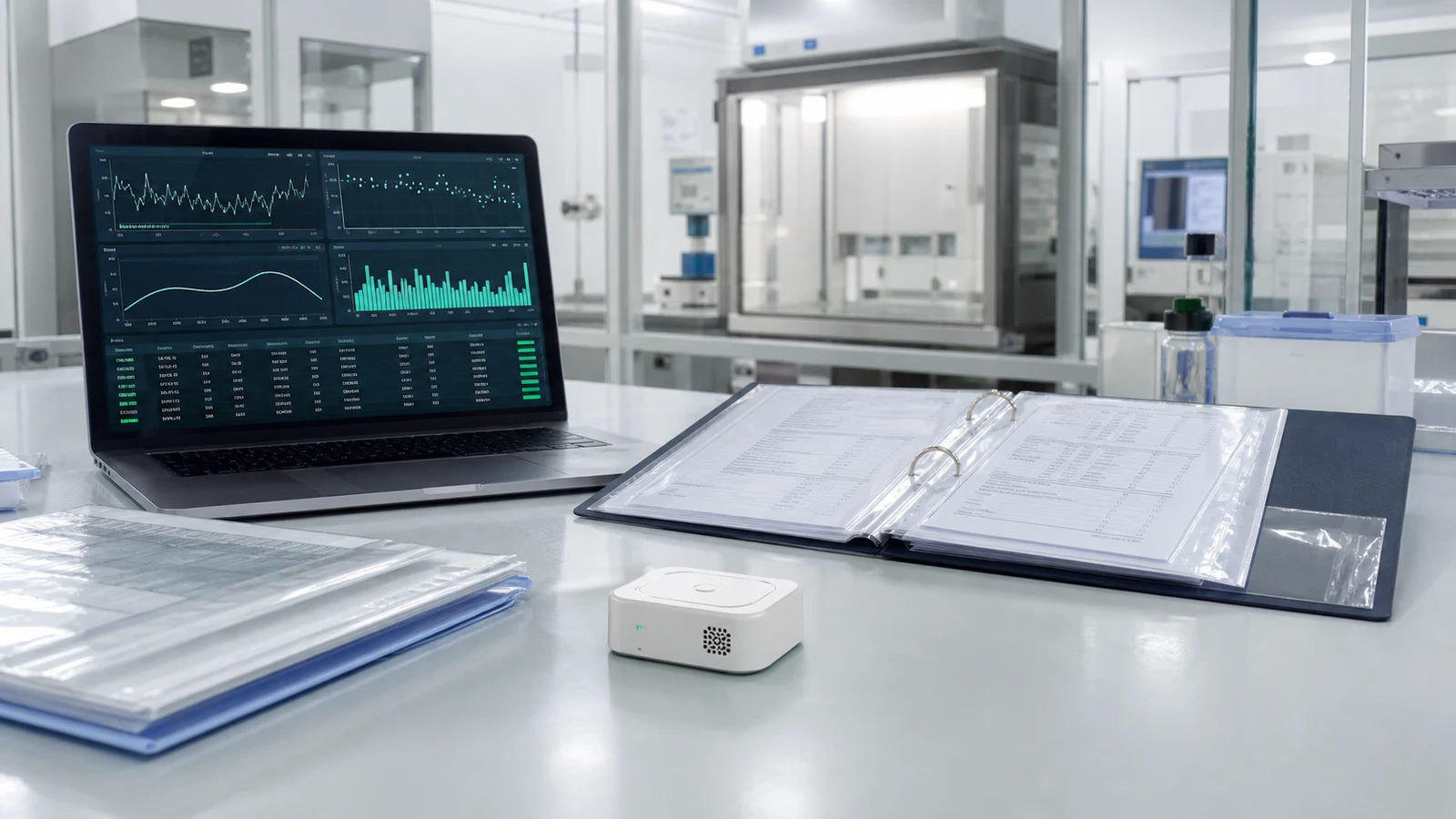
Pharmaceutical environmental monitoring is not useful merely because it produces many readings. The record must remain complete, consistent, attributable and available for review. A temperature value without a dependable timestamp, device identity or change history cannot provide the same decision support as a traceable observation. Strong data integrity therefore begins with the whole data lifecycle: capture, transmission, access, review, correction, retention and retrieval.
Integrity is an operational quality issue
Environmental data informs investigations, maintenance, storage review and product-quality decisions. Missing intervals, shared logins, uncontrolled exports or undocumented edits can obscure what happened and delay a response. Most weaknesses arise from ordinary process and data-management gaps rather than deliberate misconduct, which makes clear procedures, practical training and usable systems especially important.
Reliable records support regulated work, but software cannot grant compliance or make a release decision. Each organisation must define intended use, validate its processes where required and apply its quality management system. Nvirosense™ provides monitoring evidence, alarms and traceability to support those responsibilities.
Preserve context from capture to review
A defensible record identifies the device, location, timestamp and measured value, together with status information that could affect interpretation. Time synchronisation, calibration history, communication gaps and alarm acknowledgements belong in the review context. Automated capture reduces transcription, but exceptions still need visible handling rather than silent interpolation or deletion.
Access controls should reflect job responsibilities, and records should remain readable for the required retention period. Backups, tested recovery and secure transmission reduce the risk of loss. Cybersecurity controls protect the environment around the data, while audit trails show how authorised users interacted with the platform.

Make the audit trail meaningful
An audit table is useful when it answers practical questions: who performed an action, what changed, and when did it occur? Nvirosense™ records user-associated platform actions with dates and times so reviewers can reconstruct relevant activity. The trail should be reviewed as part of a defined procedure rather than treated as a passive feature that proves control on its own.
Training completes the system. People need to understand how to report discrepancies, annotate events and escalate gaps without fear of hiding a problem. Periodic review can then identify recurring issues in devices, workflows or permissions and turn them into corrective work.
Use analytics as a review aid
Analytics can identify unusual patterns, repeated excursions or missing data for closer attention. They can prioritise a large record set, but a flag is not evidence of wrongdoing and an unflagged record is not automatically acceptable. Human review must consider process knowledge, device condition and associated quality records.
The most valuable monitoring architecture makes that review efficient without concealing the source. A chart should lead back to readings; an alarm should lead to acknowledgement and response; and a report should retain the period, devices and rules used to produce it.
Data integrity is sustained through disciplined operations, not a single technology. When dependable sensing, controlled access, audit trails, training and review procedures work together, pharmaceutical teams gain environmental evidence they can investigate and explain. Nvirosense™ supports that evidence chain while formal validation, quality approval and regulated decisions remain with the customer.