

August 11, 2022
Cherries of Eden Monitored by Nvirosense™
Orchard sensors and Nvirosense™ analytics helped a Mpumalanga cherry operation observe blossom temperatures and manage an overhead-cooling strategy.
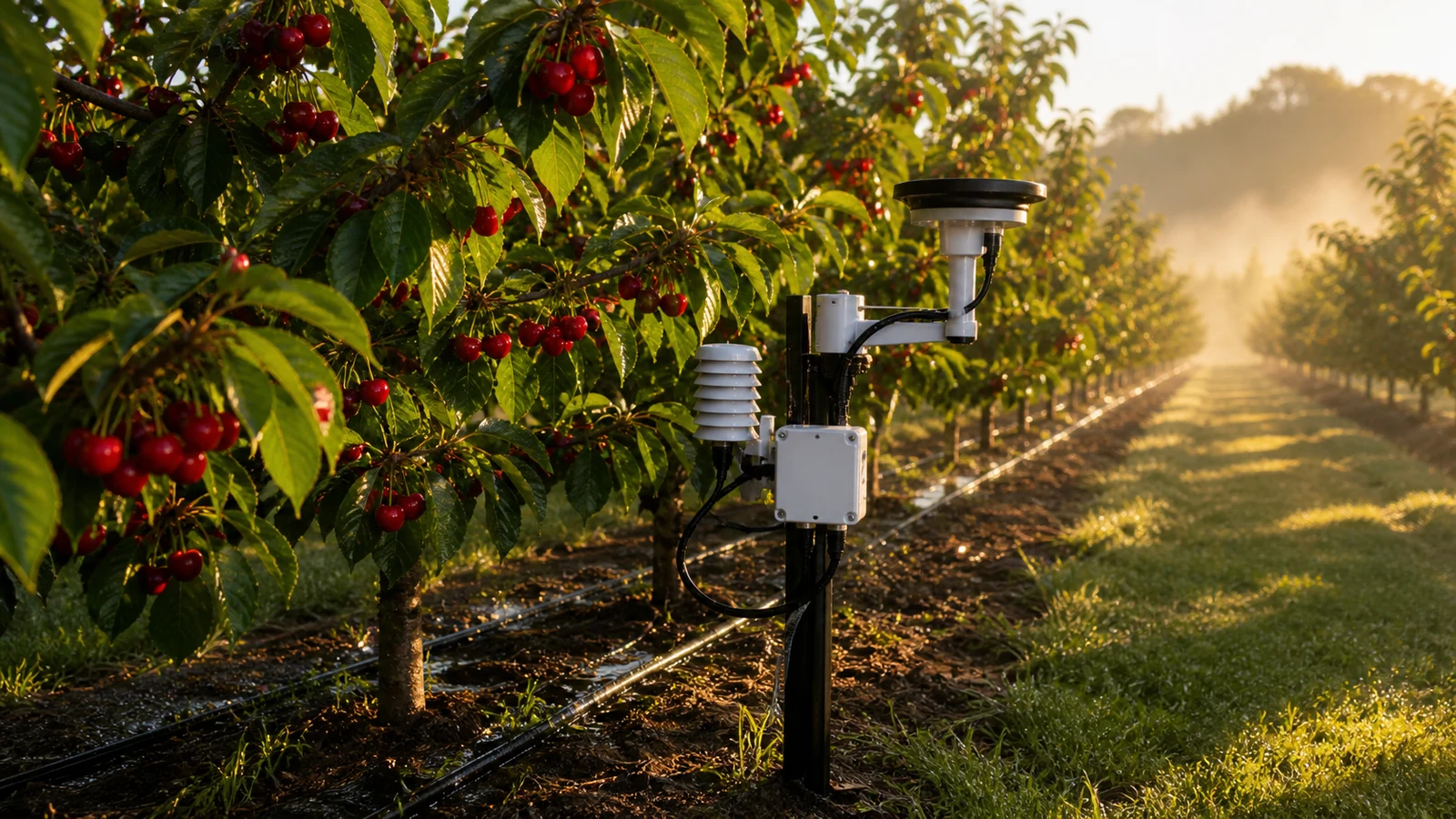
Growing a crop outside the climate in which it naturally thrives makes local evidence especially important. At Cherries of Eden near Lydenburg, Mpumalanga, an overhead-cooling installation was developed to help maintain cold conditions for cherry trees adapted to a cooler climate. Monitoring gave the farm a way to see how conditions varied within the orchard and to assess the cooling operation against its practical objective.
Start with the crop response
The operating aim was to support dormancy by keeping trees cold enough during the relevant period. The grower's understanding was that stronger dormancy would support healthier growth and yield potential in summer. That agronomic aim shaped what needed to be observed: not only general weather, but the conditions experienced around the blossoms themselves.
A monitoring plan should treat this as a site-specific management strategy, not a universal prescription for cherries. Variety, phenology, elevation, water availability and specialist advice all affect how cooling should be operated.
Instrument the orchard at several levels
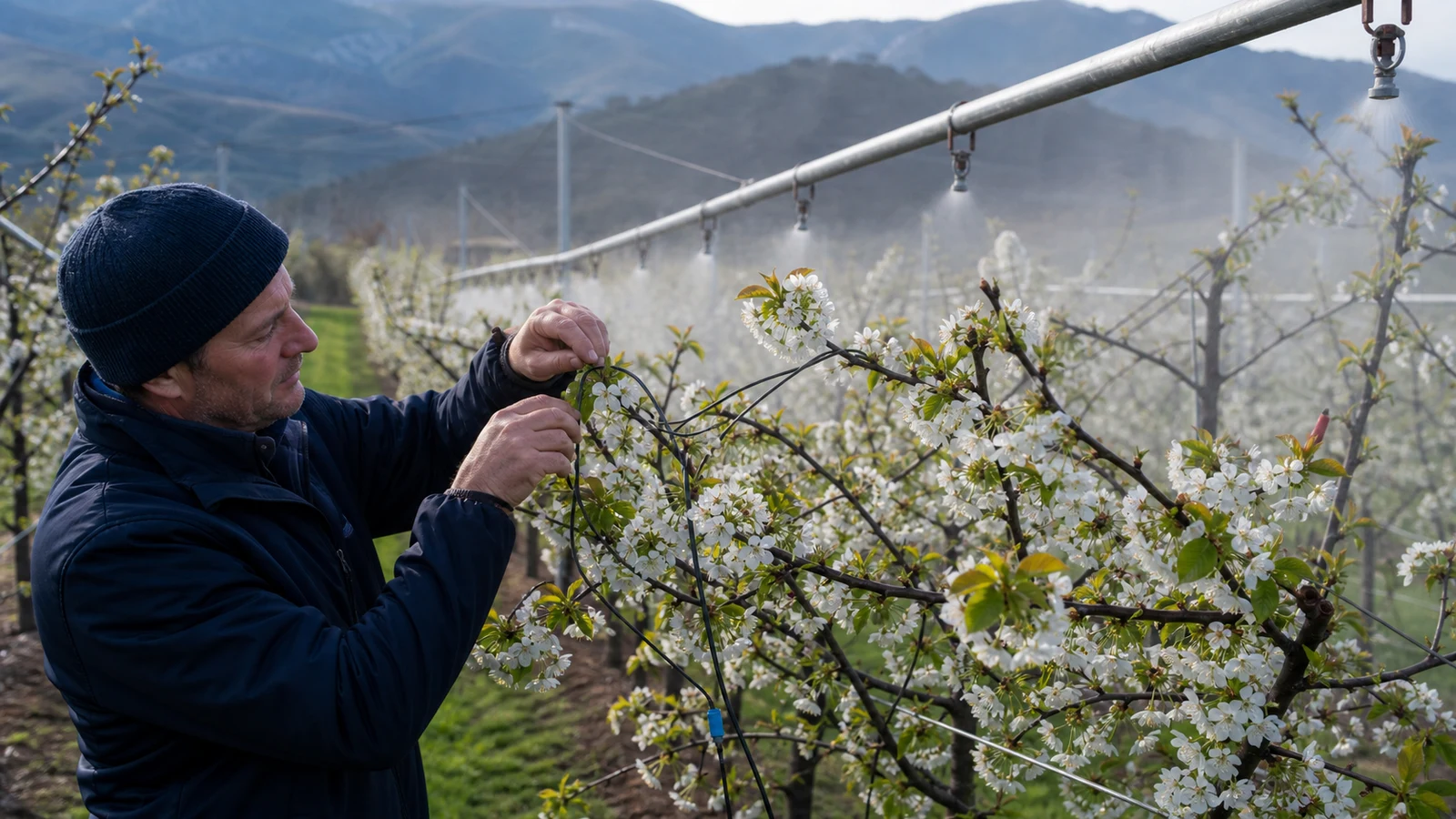
The installation combined LoRaWAN I/O controllers with temperature and humidity loggers. Thermocouples were placed in blossoms at different heights and positions so the record could reveal spatial differences that a single ambient sensor would miss. Multiple points also made it possible to compare the reach of the overhead-cooling system.
Placement records are vital in an orchard because canopies and blossoms change. Each channel should retain a clear name, tree or zone reference, height and installation note. Routine inspection helps identify a displaced probe before its readings are used for a management decision.
Connect cooling events with evidence
Nvirosense™ brought the distributed measurements into a common view. Operators could examine temperature and humidity through a cooling event and compare different locations rather than relying on an impression from one part of the orchard. The LoRaWAN network reduced the need to visit every logger for routine visibility, subject to normal coverage and device-health checks.
The most useful analysis links environmental response to system operation. Start and stop times, valve or controller status and notes about weather or field work allow the team to ask whether cooling reached the intended areas and how long its effect lasted.
Learn and refine
A season's record provides a basis for refining sensor placement, operating rules and maintenance. It may reveal blocks that respond differently or conditions in which overhead cooling has less effect. Those signals should prompt agronomic and engineering review rather than automatic control changes without safeguards.
Over several seasons, traceable histories can help the farm compare environmental conditions with growth and yield observations. That is how a bespoke installation becomes a learning system instead of a once-off piece of infrastructure.
The Cherries of Eden deployment shows how sensing can make a specialised orchard intervention observable. By connecting blossom-level measurements, LoRaWAN controls and operational history, Nvirosense™ gives growers evidence to review performance and improve future decisions.