

June 24, 2022
Air Quality Monitoring for Healthier Spaces
Carbon-dioxide, temperature and humidity trends help facilities teams investigate ventilation and comfort while retaining evidence for action.
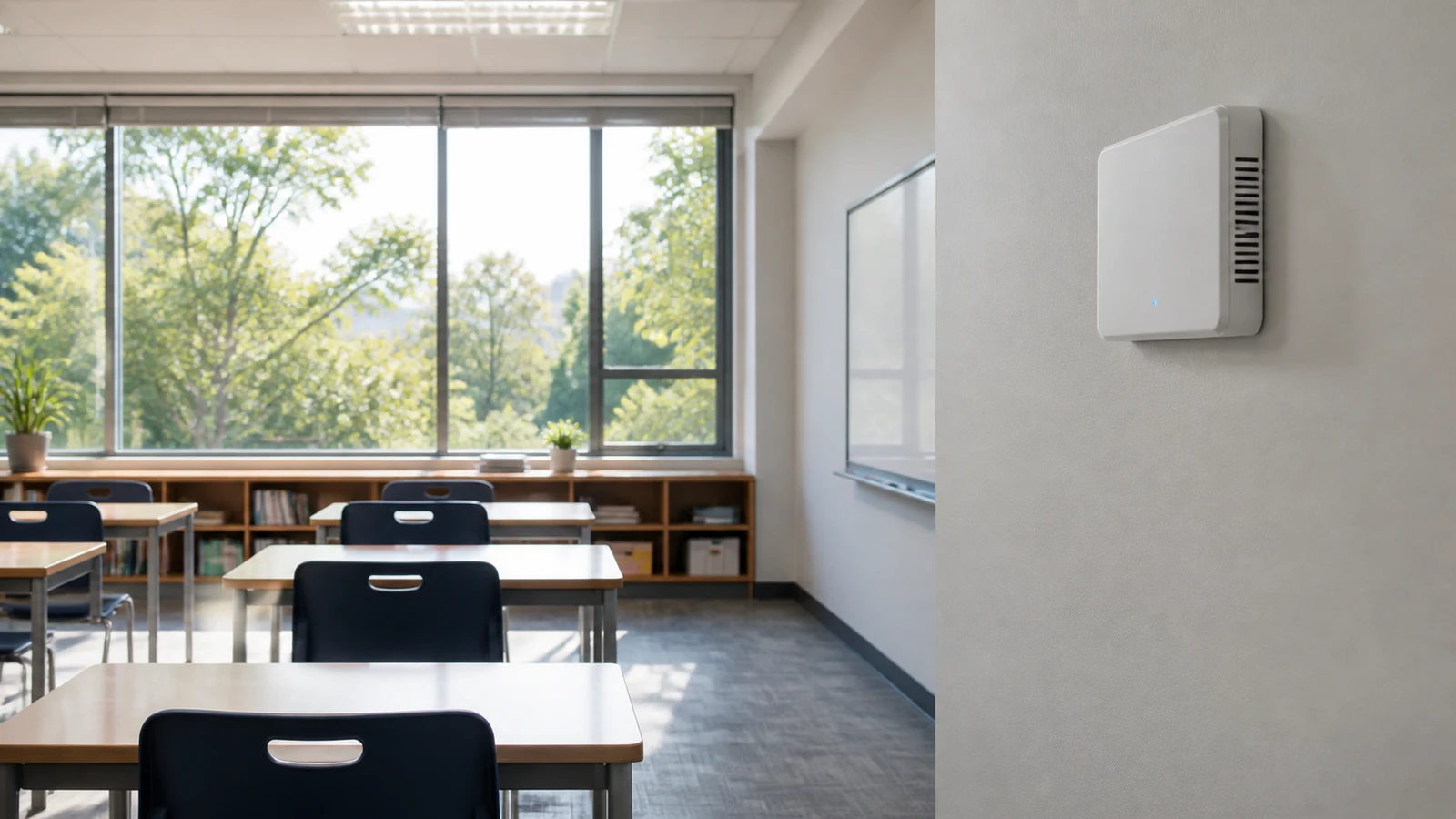
A noticeable outdoor pollution event can make air quality impossible to ignore, but many indoor-air concerns are less obvious. Occupancy, ventilation, activities and outdoor conditions all shape the air inside offices, laboratories, gyms, restaurants, factories and homes. Monitoring helps facilities teams see patterns, investigate complaints and check the effect of operational changes.
Understand what carbon dioxide can show
In occupied spaces, carbon-dioxide trends are often used as an indicator of how effectively outdoor air is diluting human-generated emissions. A rising concentration may prompt a review of occupancy and ventilation. It is not a complete measure of indoor-air quality and does not directly describe every pollutant or health risk.
Temperature and relative humidity add important comfort and building context. Where odours, combustion, industrial processes or outdoor pollution are concerns, the investigation may also require particulate, volatile-organic-compound or other specialist measurements.
Collect representative evidence
The battery-powered HOBO MX1102A records carbon dioxide, temperature and relative humidity and supports local Bluetooth access. Its compact format can suit temporary studies or ongoing room monitoring. Placement should avoid direct breath, open windows, heat sources and other locations that would distort the intended room-level picture.
A sampling interval needs to capture occupancy changes without producing unnecessary data. Device time, location, calibration status and study dates should be recorded. Any comparison with a reference scale must use guidance appropriate to the jurisdiction and application, accounting for device accuracy and the limits of carbon dioxide as a proxy.
Add remote visibility and alerts
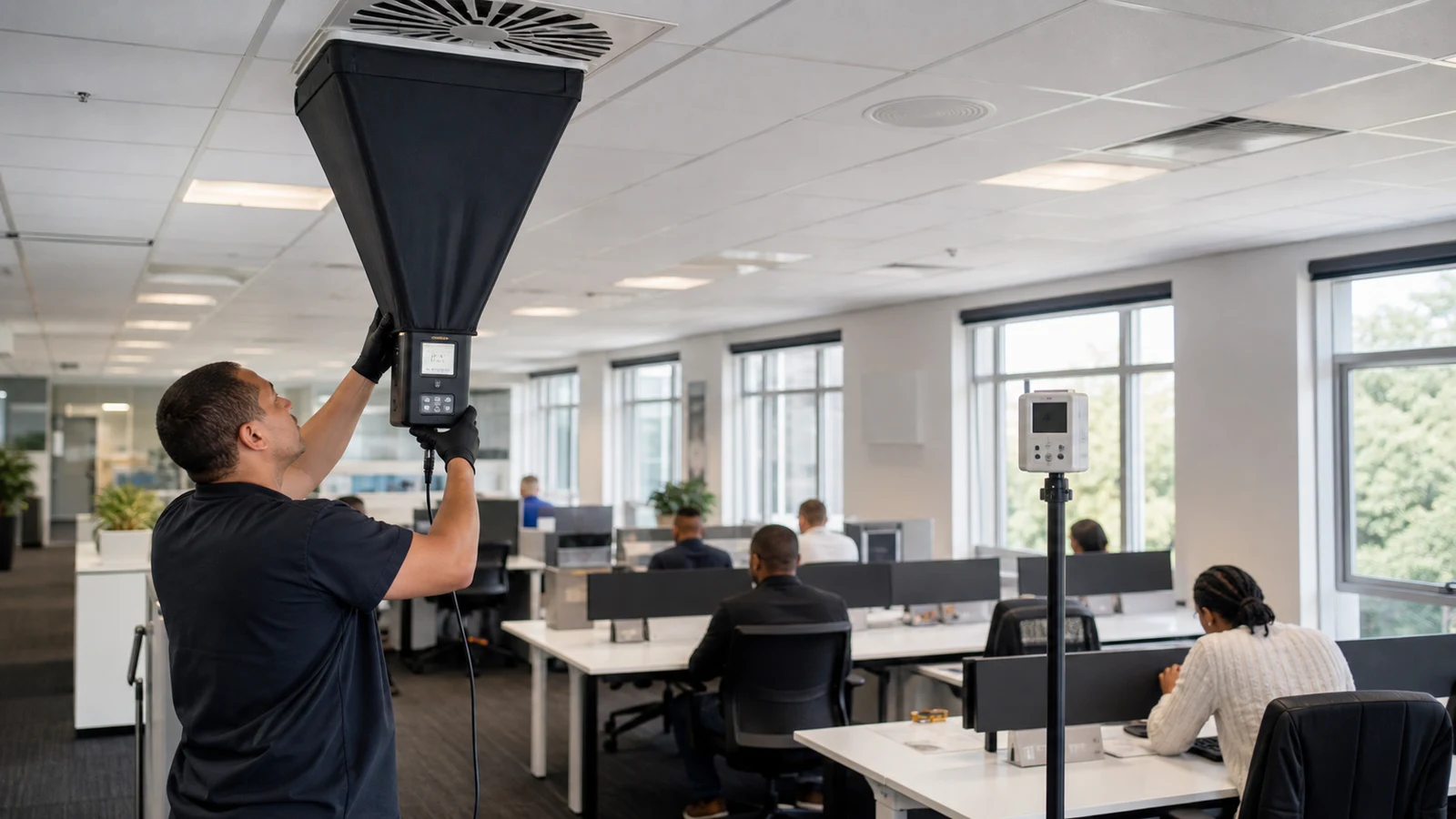
An Onset MX Gateway can retrieve compatible logger data and send it over Ethernet or Wi-Fi to HOBOlink. Remote access reduces manual collection and can support text or email notifications when user-defined thresholds are crossed. Network loss, gateway coverage and notification delivery should be tested during commissioning.
Nvirosense™ can bring room measurements, alerts and facilities context into a common analytical view. Teams can compare spaces, examine recurring daily peaks and relate changes to occupancy schedules or ventilation work. A visible last-contact time prevents stale data being mistaken for a current condition.
Close the loop on indoor conditions
Monitoring is useful when it leads to a documented response. Facilities teams might inspect ventilation, adjust schedules, investigate a specific source or commission a specialist assessment. Recording the action beside the trend makes it possible to see whether conditions improved.
Alerts are prompts, not diagnoses. Health concerns and regulatory questions should be referred to competent occupational-health, environmental or ventilation professionals. The platform's role is to preserve the evidence that supports those decisions.
Indoor-air monitoring turns an invisible and variable condition into a reviewable history. With representative sensors and cautious interpretation, Nvirosense™ helps teams identify patterns, coordinate action and verify improvements to the spaces people use.