

January 19, 2023
Agriculture and Weather Monitoring
Local weather observations give farms the field-scale context needed to interpret crop conditions, plan work and adapt to changing patterns.
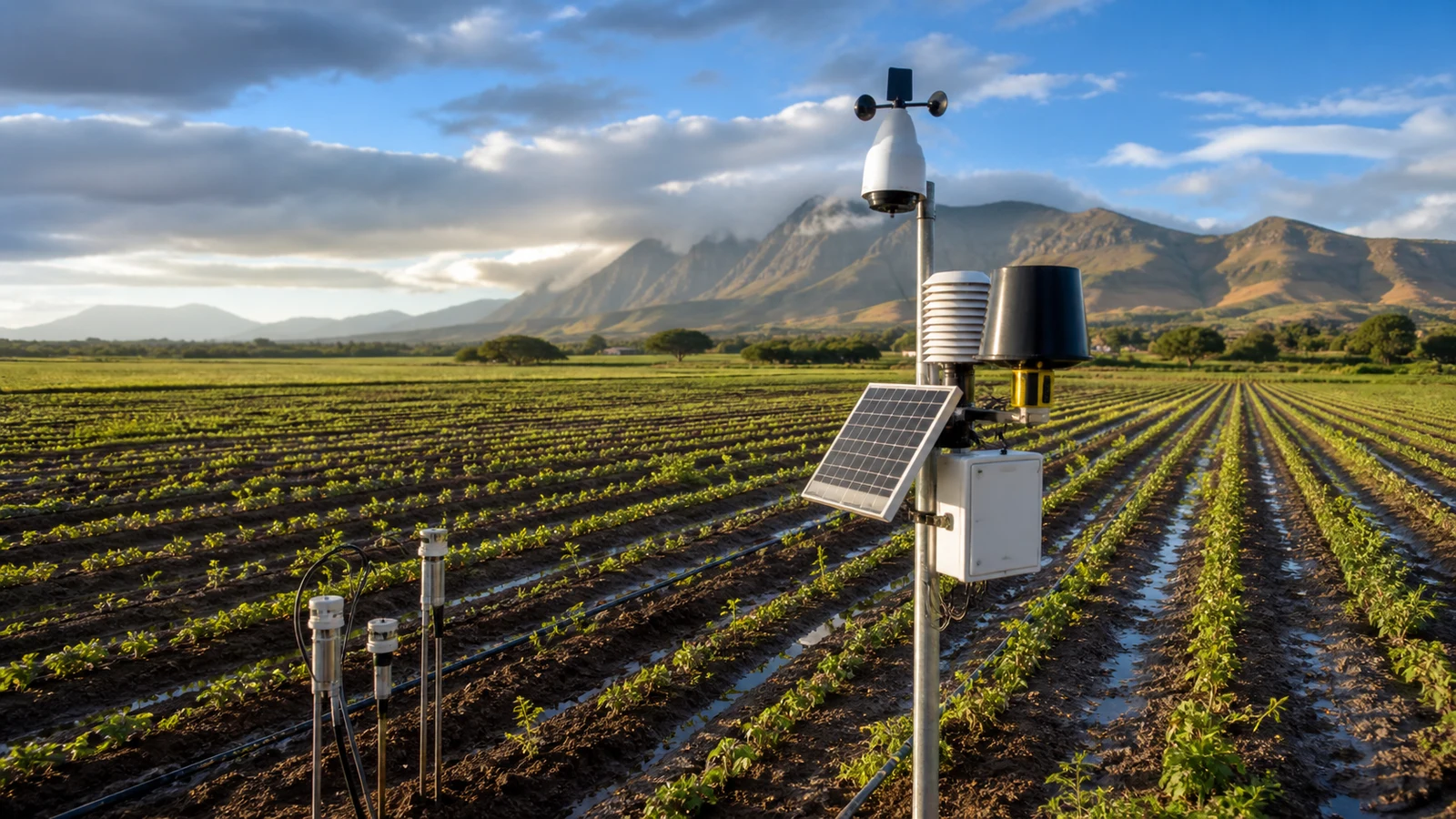
Regional forecasts are valuable, but farm decisions are often made at block, orchard or grazing-area scale. Elevation, slope, vegetation and structures can produce a microclimate unlike the nearest public station. On-farm monitoring closes that gap and creates a history for comparison with crop, irrigation and livestock outcomes.
Observe the variables that drive decisions
Air temperature, humidity, rainfall, wind, pressure and solar conditions affect field work and crop response. Carbon dioxide and particulate measurements may add context for particular questions. Each variable should serve a defined decision rather than simply filling a dashboard.
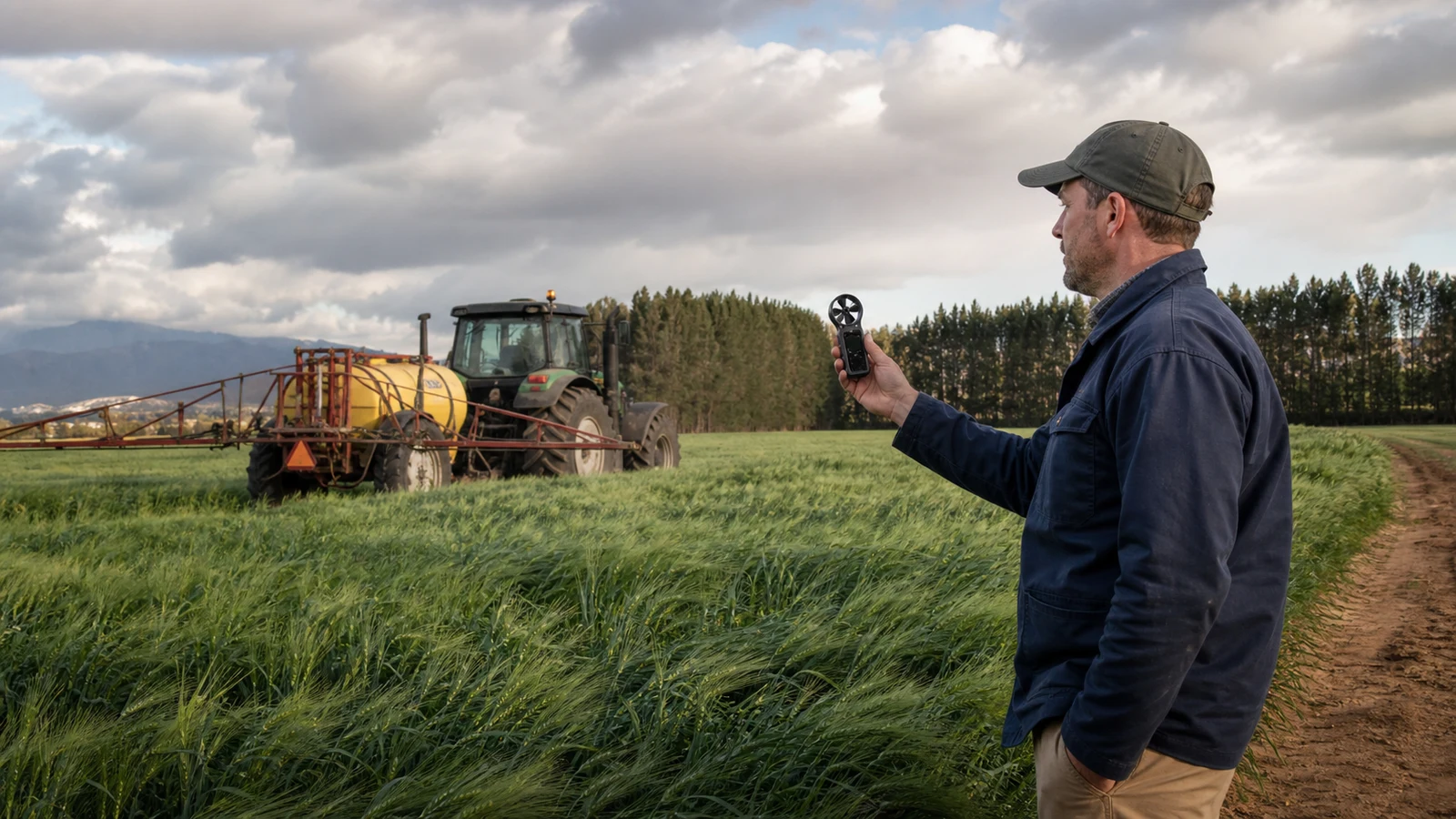
Rain start, duration and amount can inform irrigation review; wind conditions can constrain spraying; temperature and humidity patterns can help assess disease pressure. These are decision inputs, and local agronomic judgement remains necessary when translating them into action.
Use an integrated weather station
Seeed Studio's SenseCAP S1000 is a compact, solid-state station designed to combine ten measurements, including rainfall, wind, air temperature, relative humidity, pressure, light, carbon dioxide, PM2.5 and PM10. With no conventional moving wind or rain components, it offers a different maintenance profile from traditional stations, though siting, cleanliness and periodic checks still matter.
Radiation shielding supports ambient temperature measurement, while an electronic compass can assist orientation. Specifications should be checked against the accuracy and environmental range required for the project before selection.
Connect the station to the farm record
The S1000 communicates through RS-485 using Modbus RTU and can pair with a compatible logger or gateway. A SenseCAP S2100 LoRaWAN logger is one route into a connected system. Network range and availability must be confirmed on site.
Nvirosense™ can bring station data together with soil, irrigation and asset records. Consistent timestamps and clear station metadata allow a rainfall event or heat period to be compared with what happened in specific blocks.
Build climate intelligence over time
A single season helps with immediate operations; a maintained multi-season history supports deeper analysis. Farms can examine shifts in growing conditions, test whether rules still suit local patterns and retain evidence for future crop or infrastructure planning.
Sensor histories do not replace regional climate science or forecasting. They provide ground-level evidence that helps teams interpret those broader sources in the context of their own land.
Weather monitoring becomes agricultural intelligence when reliable local observations are connected to farm actions and outcomes. Nvirosense™ preserves that relationship, helping growers plan today's work while building evidence for a changing climate.