

August 03, 2023
Agricultural Sustainability with Smart Soil Sensors
Soil moisture, temperature, pH and conductivity trends help growers target water and nutrient decisions while building evidence for long-term soil care.
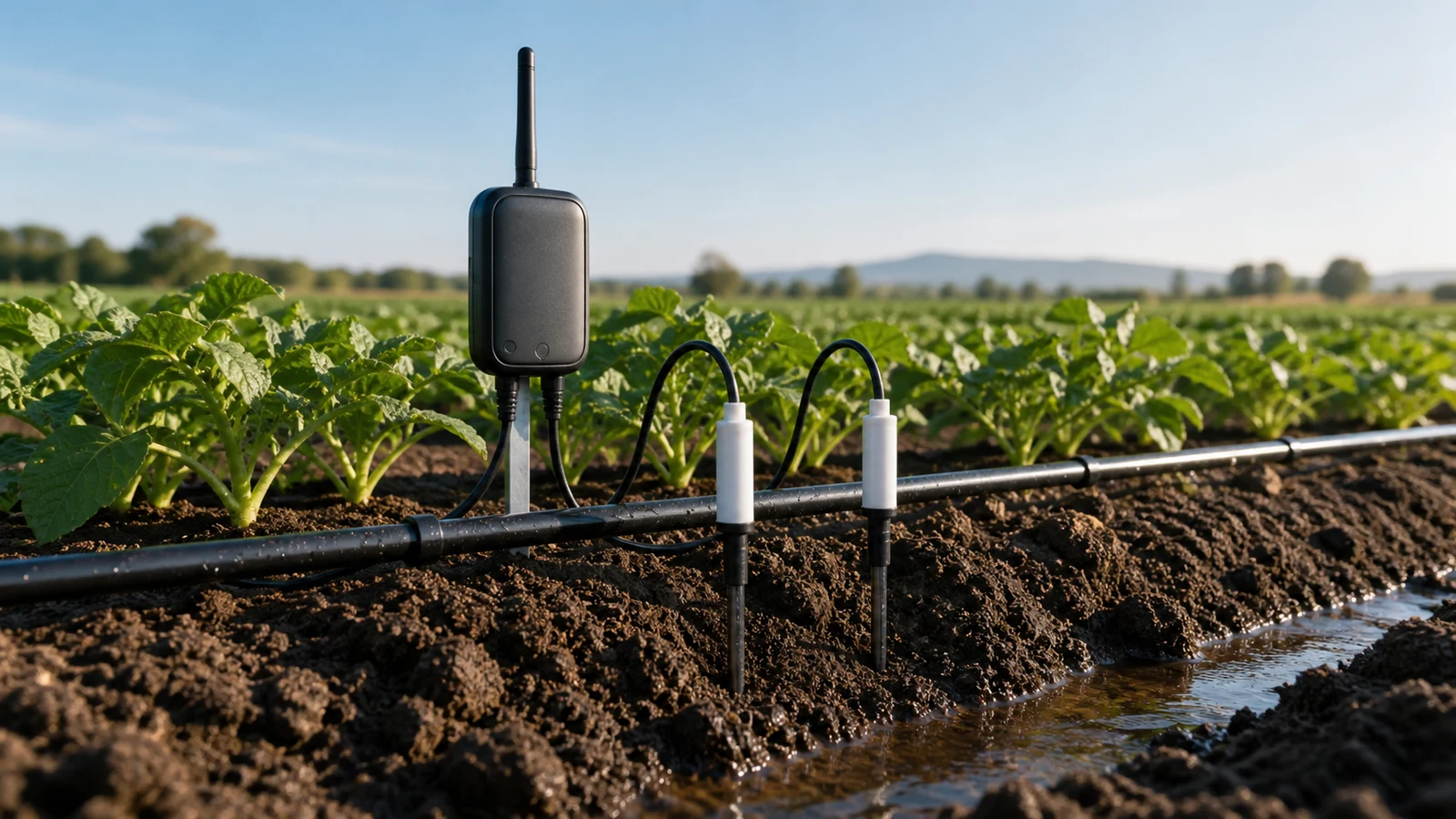
Soil is both a production resource and a living system. When irrigation, nutrients or salinity move out of balance, the effects reach crop performance, farm costs and surrounding water. Smart soil monitoring gives growers a closer view of those changes so that management can be more precise and sustainability claims can be supported by field evidence.
See why uniform management falls short
A field rarely holds water or nutrients evenly. Soil texture, slope, compaction, root depth and previous management create zones that dry, drain or accumulate salts at different rates. One occasional sample or one probe near the pump cannot represent every block.
A monitoring design should therefore begin with management zones and crop questions. Sensors placed at appropriate depths can show how water moves through the root zone, while repeated observations help distinguish a local anomaly from a pattern that deserves a change in practice.
Use moisture evidence to refine irrigation
Overwatering wastes scarce water, increases pumping cost and can carry nutrients beyond the roots. Underwatering restricts crop development and may leave fertiliser unavailable. Soil-moisture trends show both the response to an irrigation event and the rate at which a block returns towards stress.
Nvirosense™ can combine those trends with rainfall, weather demand, valve activity and irrigation records. Growers can then investigate an emitter problem, delay a cycle after useful rain or prioritise a block that is drying faster, while still accounting for crop stage and field inspection.
Understand temperature below the surface
Soil temperature affects germination, root activity, respiration, decomposition and nutrient cycling. It can vary by depth, moisture, cover and time of day, making a buried probe more informative than an air-temperature reading used as a substitute.
When temperature and moisture are reviewed together, teams gain better context for root-zone conditions and seasonal transitions. The record may support planting, irrigation and fieldwork decisions, but local agronomic knowledge remains essential to interpret what the crop requires.
Track acidity and salinity with care
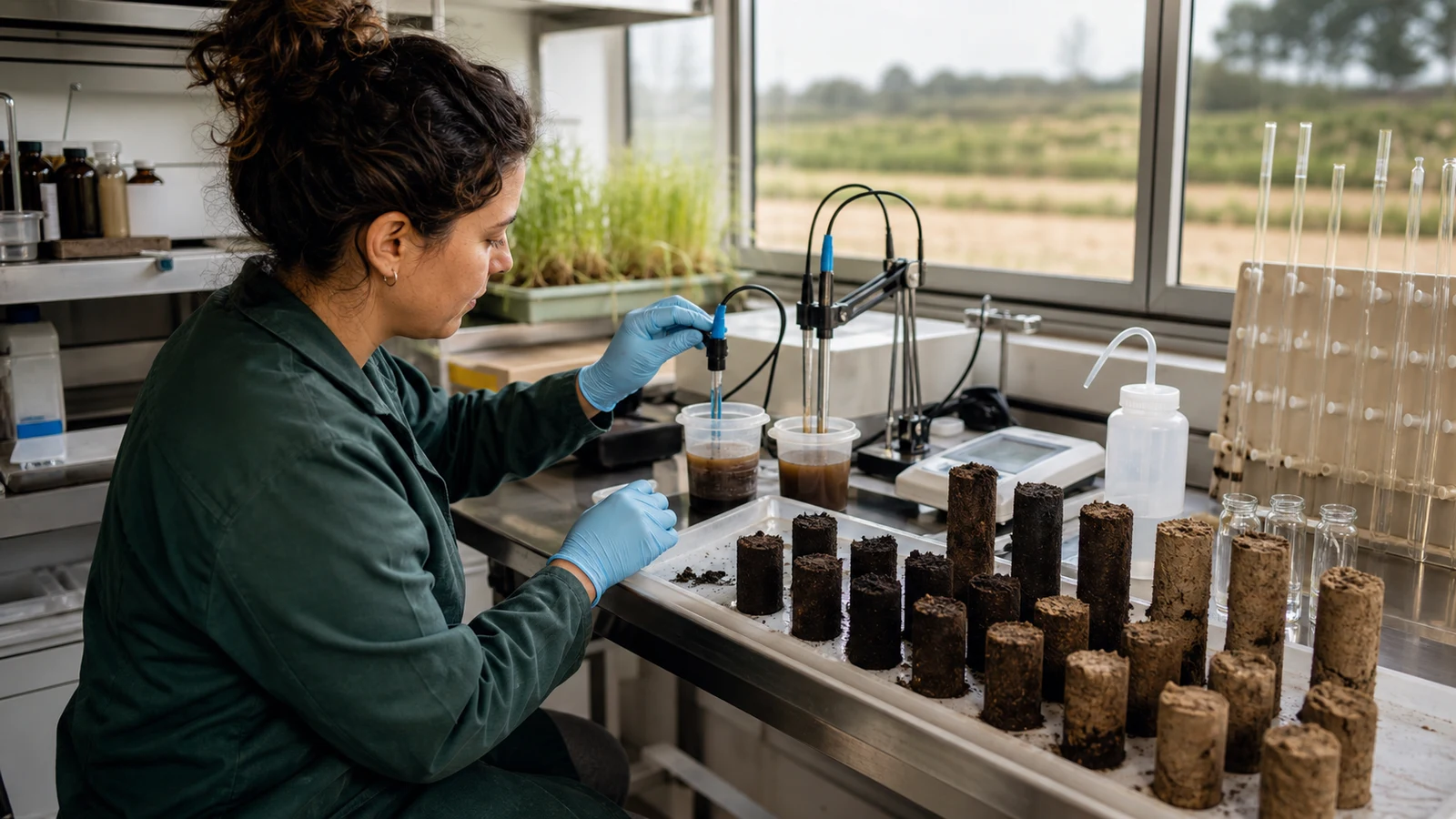
pH influences nutrient availability, while electrical conductivity provides an indication of dissolved salts. Persistent movement in either measure may prompt soil amendments, changes to fertiliser practice or further laboratory analysis. Measurements must be taken and maintained in a way that is appropriate to the instrument and soil.
These indicators are especially useful as trends and comparisons across management zones. A sensor result should not replace a complete soil test where nutrient recommendations or remediation decisions require laboratory evidence.
Detect problems before crop symptoms spread
Continuous records can reveal a wet zone that is not draining, a block that is no longer responding to irrigation or a conductivity pattern associated with salt build-up. Earlier visibility gives the farm time to inspect infrastructure and soil before a problem becomes obvious across the canopy.
Alerts should be configured around meaningful persistence and rate of change, not every small fluctuation. Linking the alert to field notes and corrective work creates traceability from the first indication to the outcome.
Make sustainability measurable
Sustainable soil management is strengthened by evidence of water applied, root-zone response, nutrient strategy and crop outcome over successive seasons. Those records help a farm assess whether a practice conserved resources, improved resilience or merely shifted cost to another part of the system.
Nvirosense™ provides the monitoring and analytics layer for that learning cycle. It supports decisions about irrigation, amendments and crop selection without claiming that a dashboard alone can guarantee yield or restore soil health.
Smart soil sensors are most valuable when they deepen the relationship between observation and field action. By measuring the root zone consistently and retaining the context around each intervention, growers can use water and nutrients more deliberately while protecting the productive capacity of the soil.